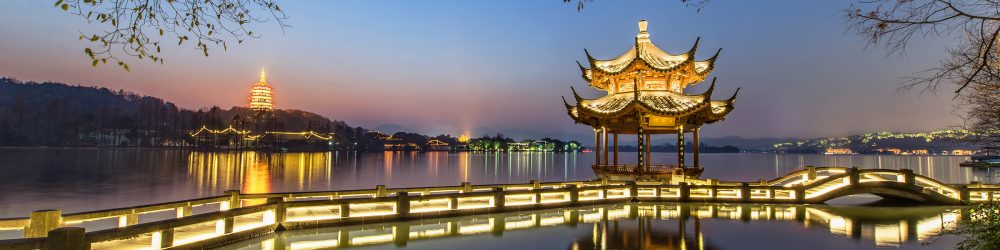
So in my ongoing quest to try and visit every place in China I haven’t been to yet, I decided over Christmas break to travel to Yunnan Province. Yunnan certainly has more to see in it than most provinces in China, though is often overlooked by people travelling to China for a few weeks. For people visiting China for the first (And perhaps only) time tend to prioritize three or four big parts of China, those being Xi’an (Terracotta Army), Beijing, Shanghai and occasionally Sichuan province to see a giant panda. These attractions locations can easily fill out a two or even a three week trip! Luckily being stuck in China does afford you generally the amount of time to see much of it. That said there were consequences to my travel. Consequences most dire!
Yunnan is a southernly province of China west of Hong Kong and bordering a bunch of south east asian states
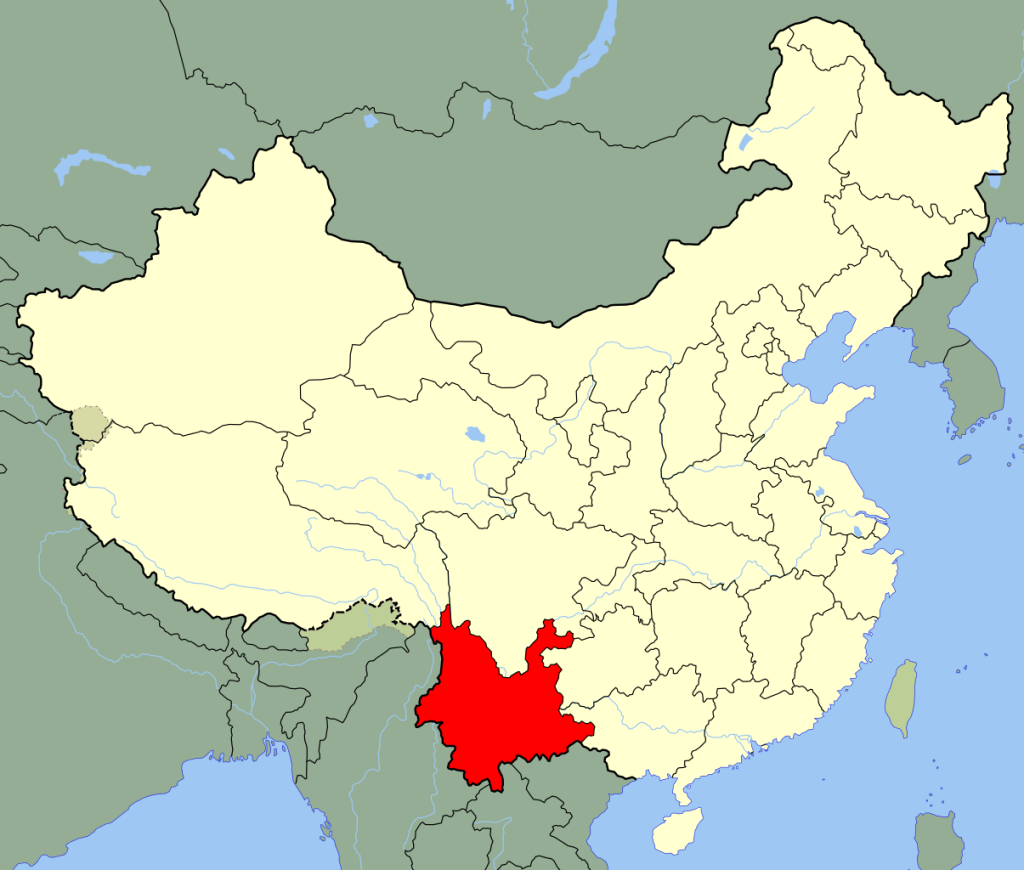
It’s got some of China’s only true tropical rain forests and is also home to many Chinese ethnic-minority groups, so many infact that its the only province in China wherein’ the ethnic minorities reach 30% of the total population! Because of it’s close adjacency to both Tibet and Thailand it’s also the only province wherein you find all three flavors of Buddhism. (Thai, Chinese and Tibetan)
The Ethnic minorities in China are numerous and at times seem to blend together due to their shared love for bright colors, beads and fancy head gear.
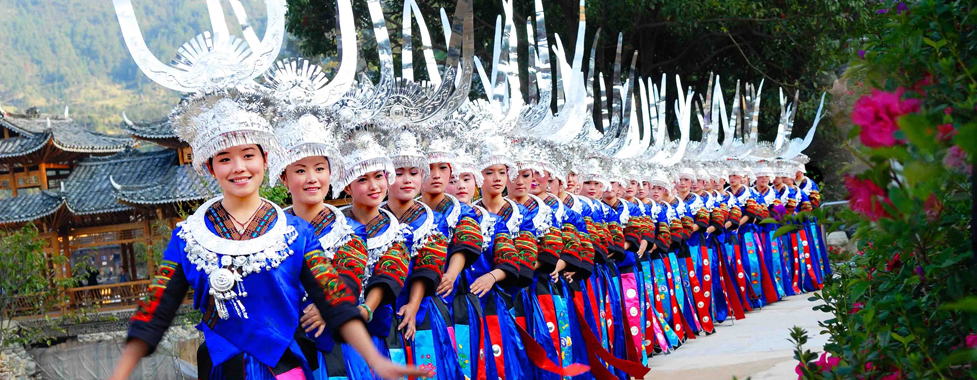

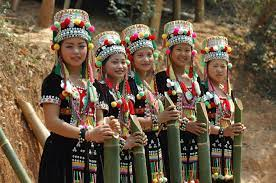
I could go indepth about the various groups and their customs but for the sake of making this blog not onerous to read through I’ll just summarize it. Basically the Minorities other than the real big ones like the Mongolians, Uyghurs, Hui, Manchus and Tibetans tend to be descended from tribal people who whilst nominally living within the Chinese Empire did not actively engage with the larger Han Chinese Culture. This was largely due to living outside of the larger walled Chinese cities and often times deep in the back country/forests/jungles/remote regions. Consequently they tend to be found in large numbers traditionally near the borders of Chinese territory and other countries. Today there are 55 such groups and they receive a controversial amount of extra support from the government. They rose to a somewhat privileged position after the communist party was established in 1949. This is in part because of the heavy support they had led Mao and the communists throughout the 1920s,30s and 40s. Having no love for the Qing Dynasty which had often persecuted them and little love for the Republic of China which largely ignored the minorities/excluded them, they chose to throw their lot in with Mao. It paid off in some ways, the overall minority population in China has risen dramatically and they can enter Chinese national universities with lower test scores. This has created some resentment amongst Han Chinese (Majority) people, but on the other hand Chinese minorities, especially those in Yunnan still overwhelmingly live in poverty. It’s startlingly quite similar to other minority vs majority situations you find in Canada and other diverse countries. The minority groups themselves are also quite often (Somewhat uncomfortably) paraded about and treated a bit like a human zoo by Chinese and foreign tourists a like.

Oh some of them also live in really cool round wooden houses.
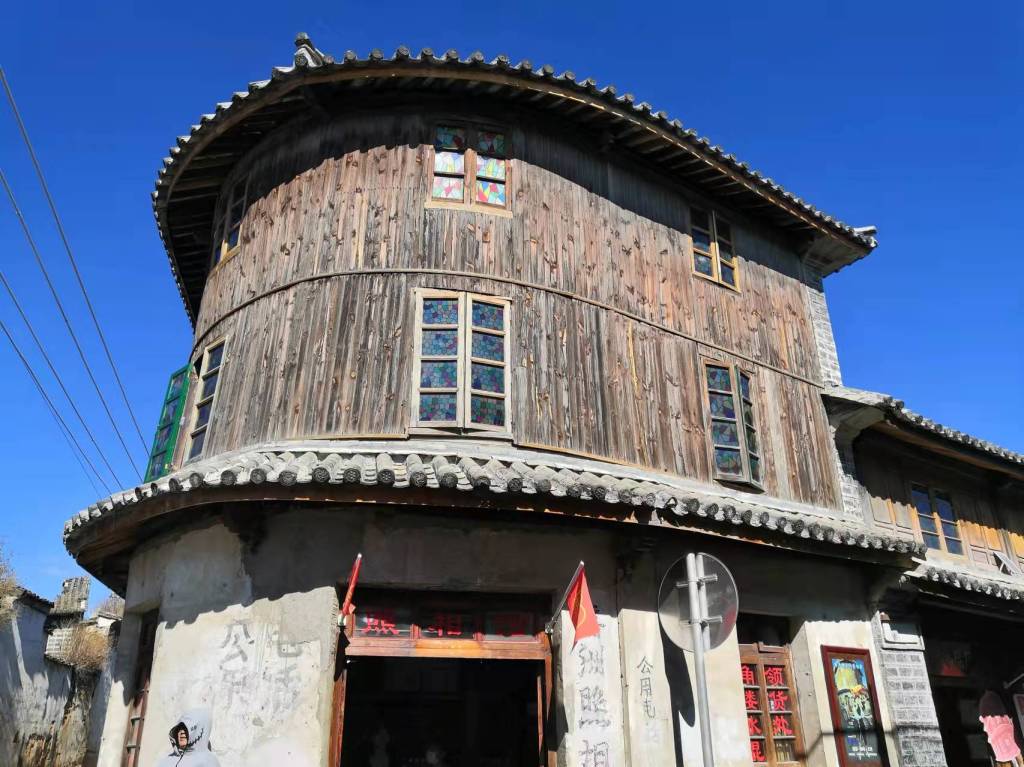
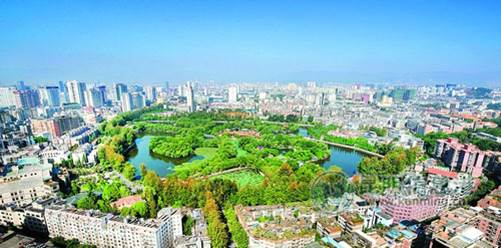
The first stop on my journey was Kunming. Kunming is the capital of Yunnan and home to its largest airport. Many people visit Kunming as a starting off point for their Yunnan trip and its got a few cool things to see. First of all, unlike many Chinese cities it is very very hilly with the city straddling the side of a small mountain.
Throughout China you can find rental bikes, they’re pretty much ubiquitous. Excitedly in Kunming they’ve stepped things up a bit by also having electric bicycles and full on scooters! They cost about 1GBP per hour to hire.

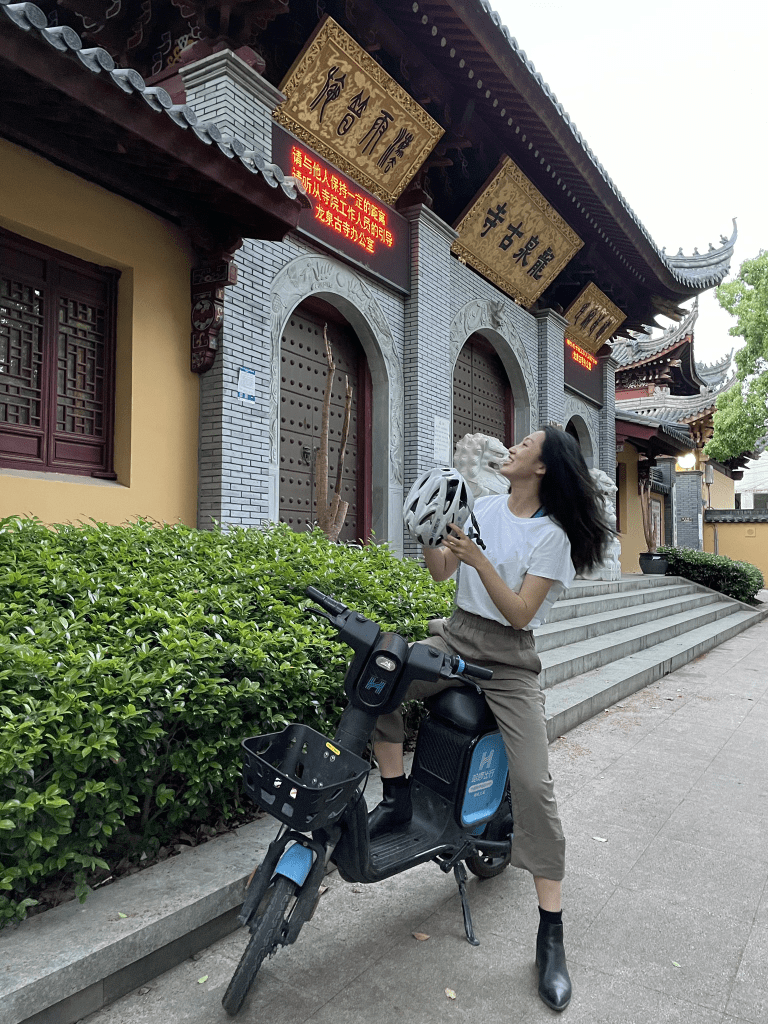
They aren’t terribly fast topping out at about 25 km/hr but it certainly made sight seeing around the city a lot easier on my feet and I was able to get a lot more done than I could have done otherwise, other than ratcheting up a high taxi bill.
Now I’ve had the same Lonely Planet china book since I first got to China, it hasn’t actually been updated since (Though the newest edition is coming out in a few weeks now) this book was published in 2018 and since the pandemic hit its has become incredibly out of date. Making matters worse I left my copy at home! I found a .PDF of the previous edition from 2015…so now I was really out of date. Still I figured some things like museums couldn’t have changed.

Behold the Provincial History Museum of Kunming….well it used to be. Location Changed and it’s now just a strange half finished art galley. Turned out the actual museum had relocated to faaaar south of the center of the city.

The museum was pretty comprehensive, with dinosaurs, early humans and generally speaking the history of Yunnan province up to the modern day. It also featured that ongoing strange theory that humans originate in China.
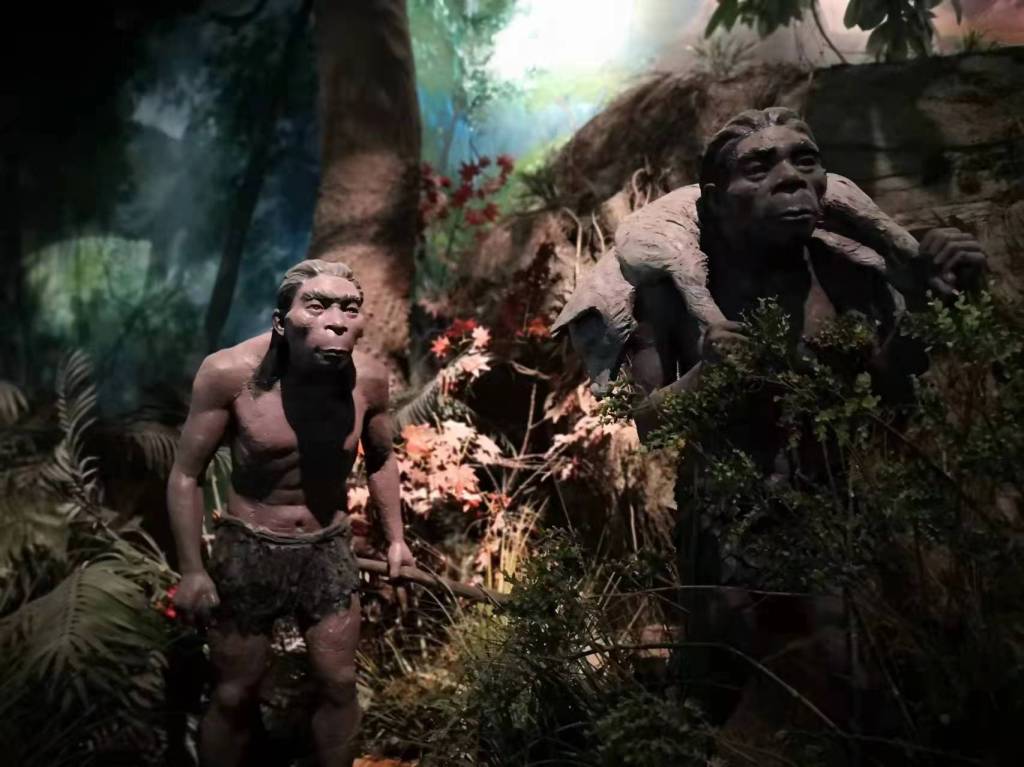
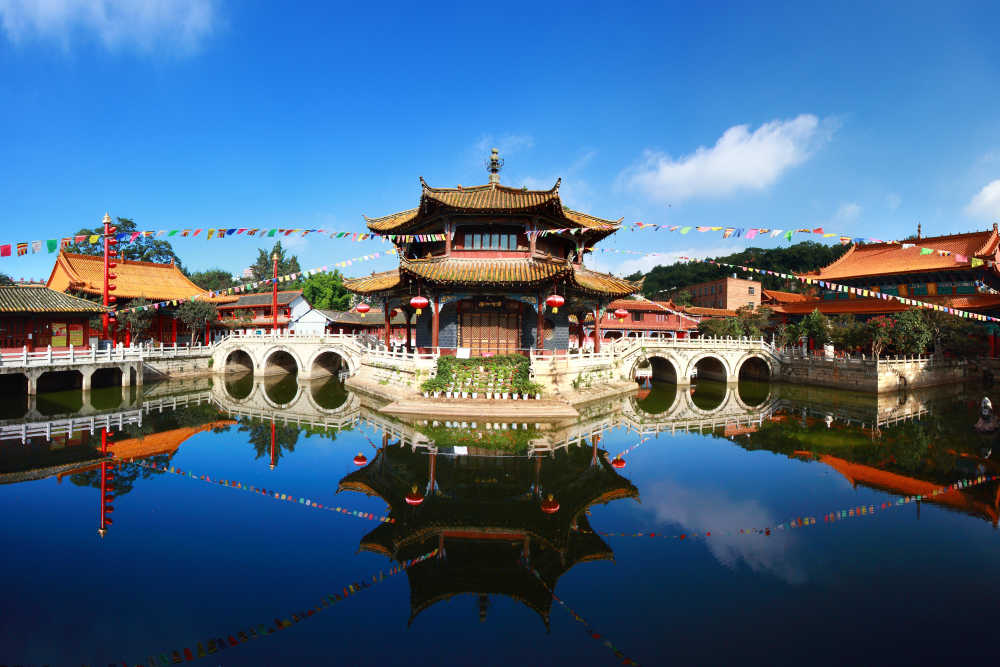
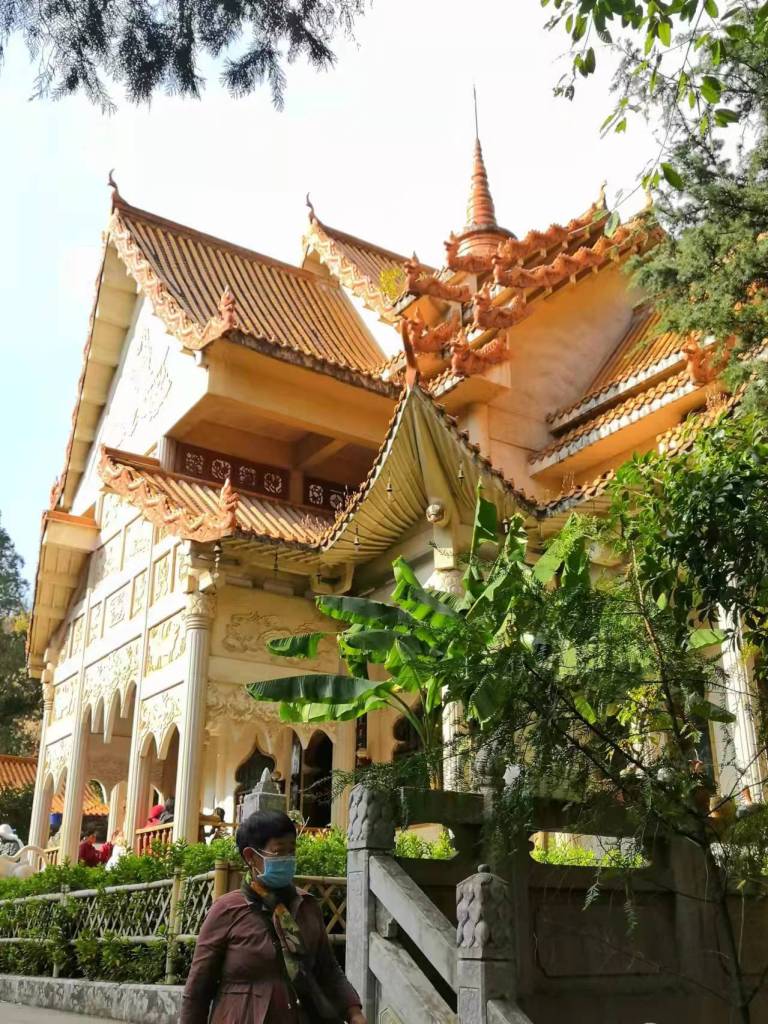
So you know there was that. Kunming also has some pretty colourful and impressive temples, but generally speaking most people do not spend much time here as it’s more of a hub to the rest of Yunnan. Though it’s biggest temple is quite unique for having a little Thai style Buddhist temple inside of it, which was given as a gift to Kunming by the previous King of Thailand himself!

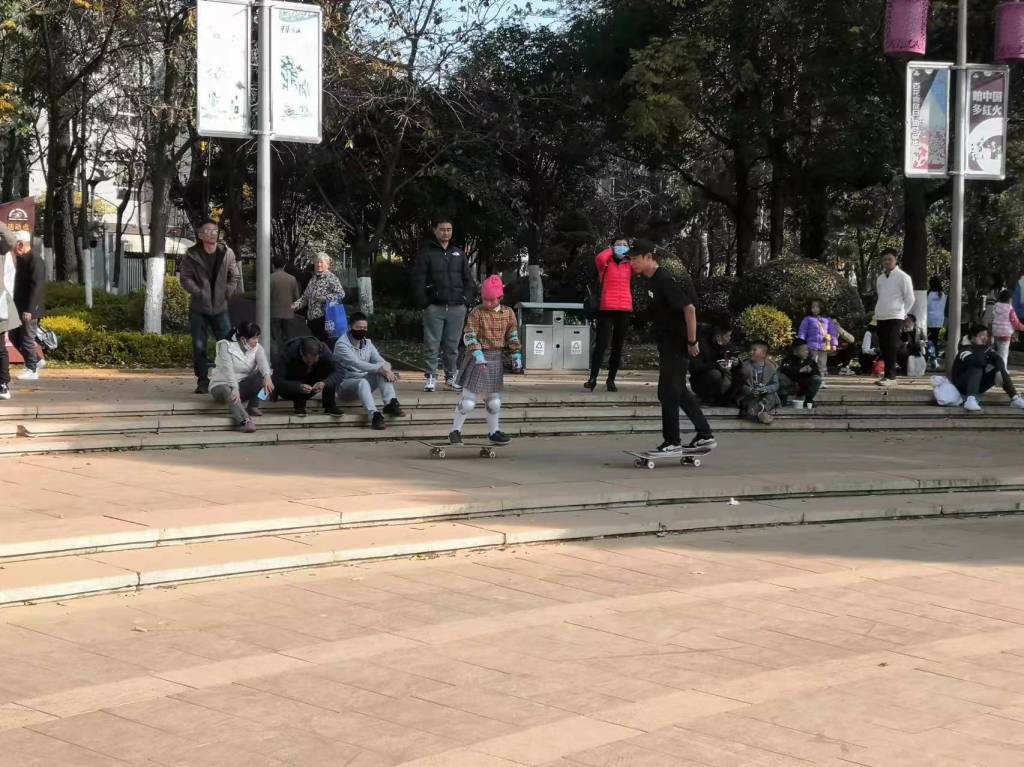
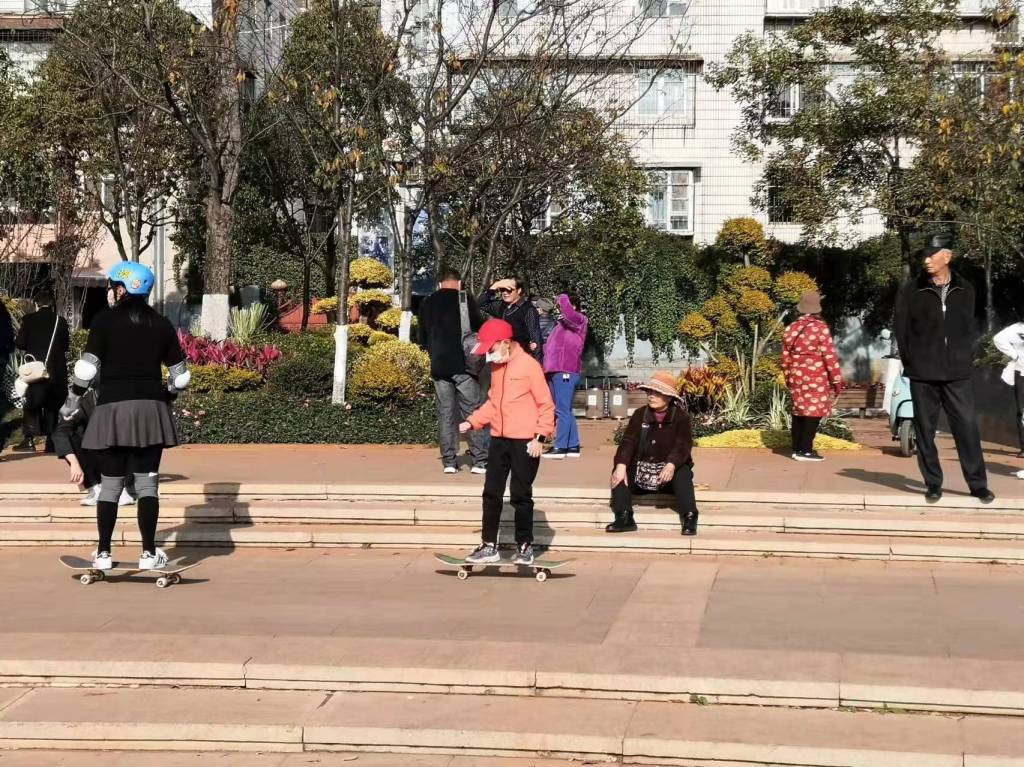
That being said I did see some pretty cool things in Kunming. Such as this nuclear family skateboarding in Green Lake Park.
I also managed to track down a place selling Yunnan’s famous (In China atleast) Crossing the Bridge Noodle soup.

Basically its a form of hot pot wherein you get a big bowl of hot chicken soup and then a big selection of toppings to add in. This serving I got was meant for one person and about the mid-tier in toppings/ingredients which you then add in yourself. The name of the soup comes from a (Probable myth) about a Confucian scholar who was working out on an office in Green Lake. Every evening his wife would travel across the bridge to the island based office with a hot pot of soup which was sealed to keep in the heat in. To make his meals interesting she always brought him different ingredients to add into the soup then and there to ensure it was still quite fresh. Freshness of Chinese food is kind of a big thing within China. It’s why when people panic buy they stock up on an absurd amount of quick to spoil vegetables.
Kunming is also famous as a stepping off point for visiting these:

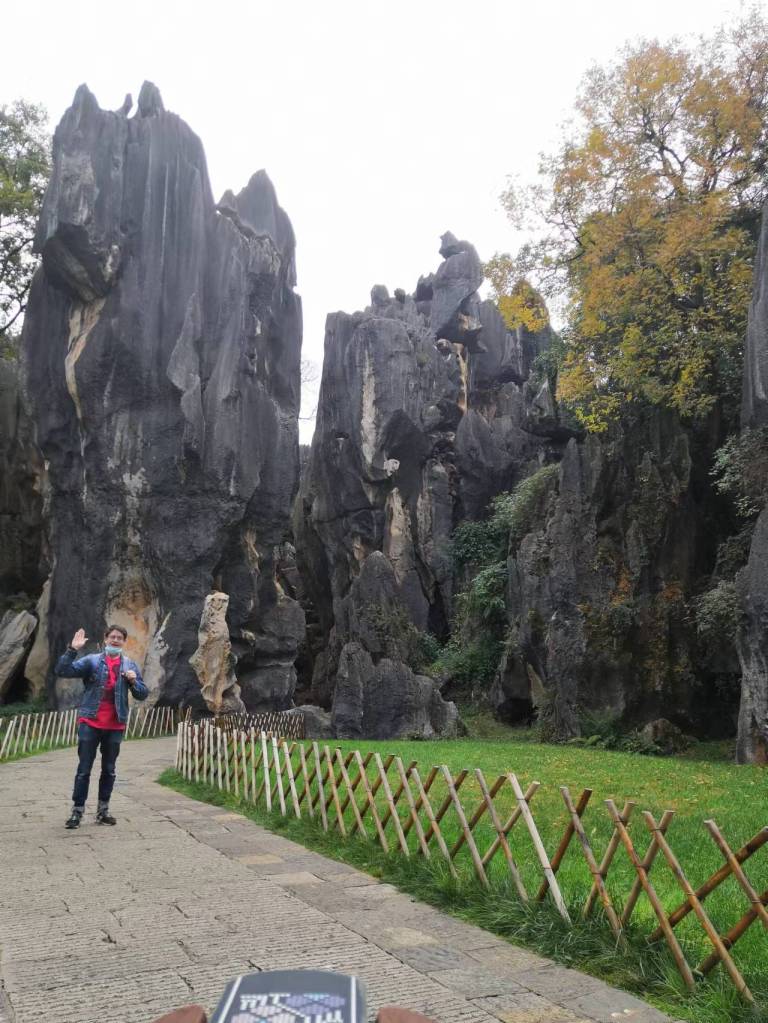
Karst stone formations which are often referred to as the stone forest. It’s a national park and one of the must see’s within central Yunnan or just southern China in general. They formed millions of years ago from erosion and glacier movements and all across this portion of Yunnan you can find these rather random and often quite tall pillars of stone jutting out of the grass. The Stone Forest is famous for just being so densely populated with them.

And densely filled with tourists wiggling through the gaps between the stones.


It really is quite a maze. Though the ride from Kunming is about 2 hours by taxi and there really simply wasn’t enough shuttle buses no doubt due to the ongoing concerns about the pandemic.
A more popular city for tourists (but not while I was there) is Dali. Dali is north of Kunming and has been a popular stop for backpackers in China since the early 1990s. Since then it’s really expanded and commercialised more for domestic Chinese tourists. That said it still has one whole kilometre long street simply called ‘Foreigners street’. Primarily because in the 90s dozens of western restaurants, hostels and bars popped up along it. The street is still home to many western style places to eat and drink though the hostels have largely moved outside of the increasingly expensive old city. Dali is famous throughout China for its quite well preserved triple Pagodas which were built about 1200 years ago.
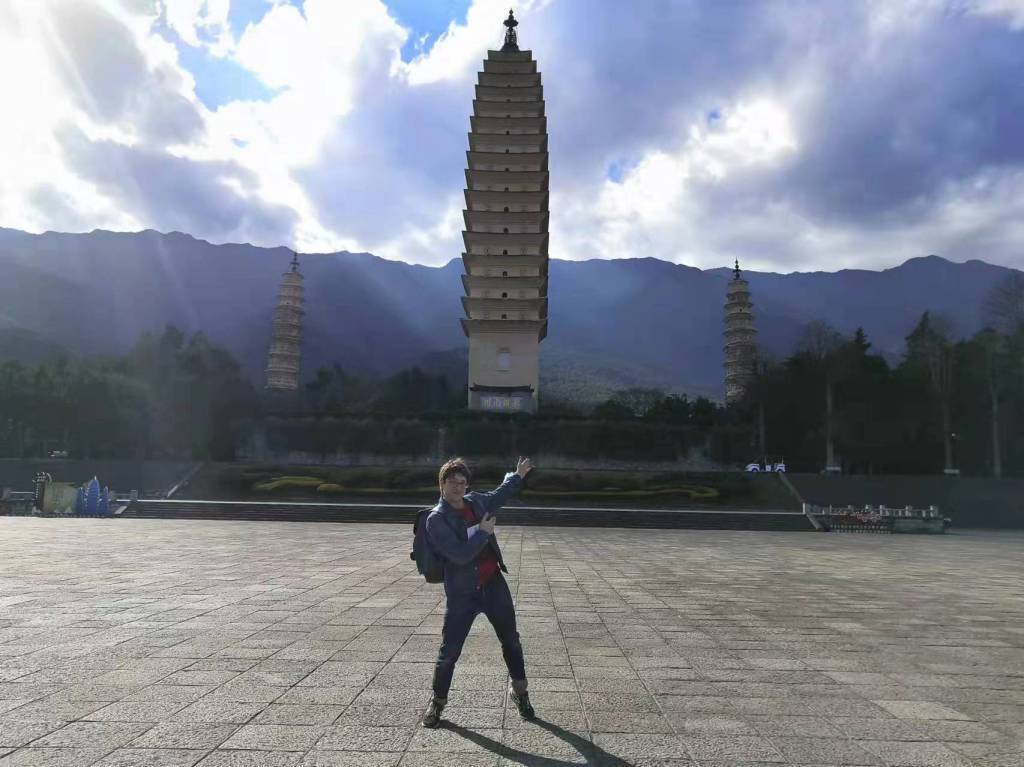
Because Dali lies at the base of a mountain range and rolls relatively flatly down into lake Erhai (One of the largest lakes and the highest elevated lake in China) the Pagodas are visible from up to 20 km’s away. From afar they all look about the same height, but as you can see from the photo up close they are strikingly different in height. They are in the front of a massively reconstructed Buddhist temple which slowly rises up along the side of the plain and into the mountains.
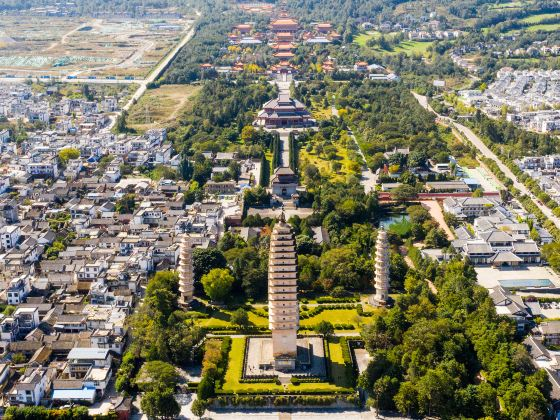
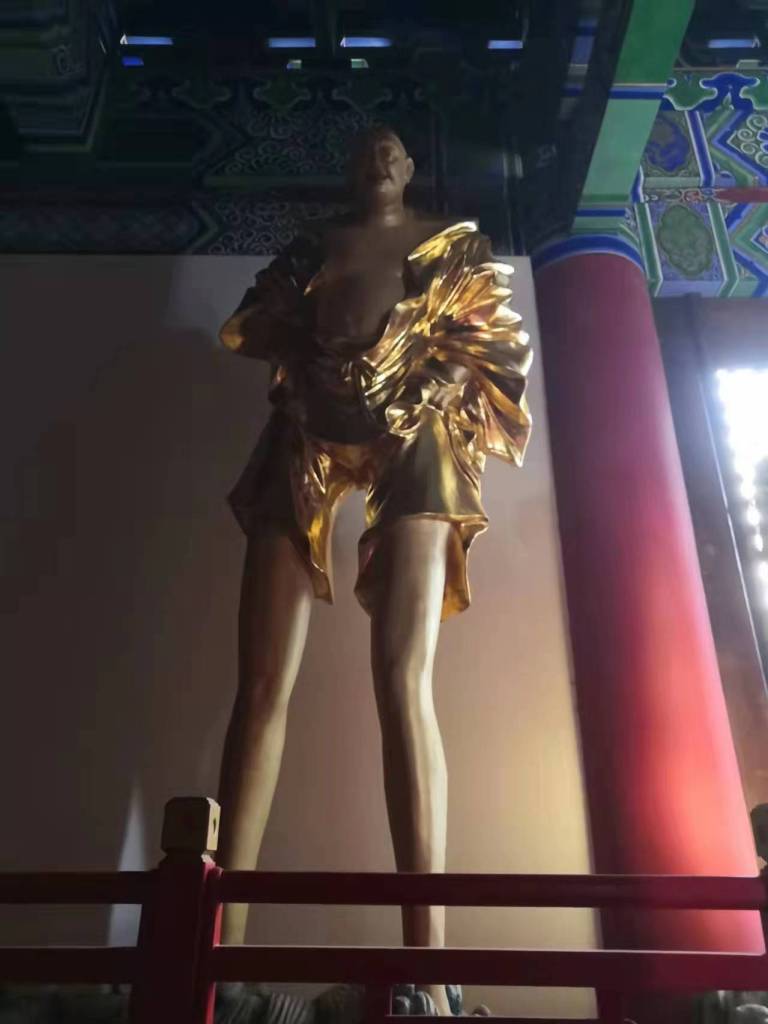
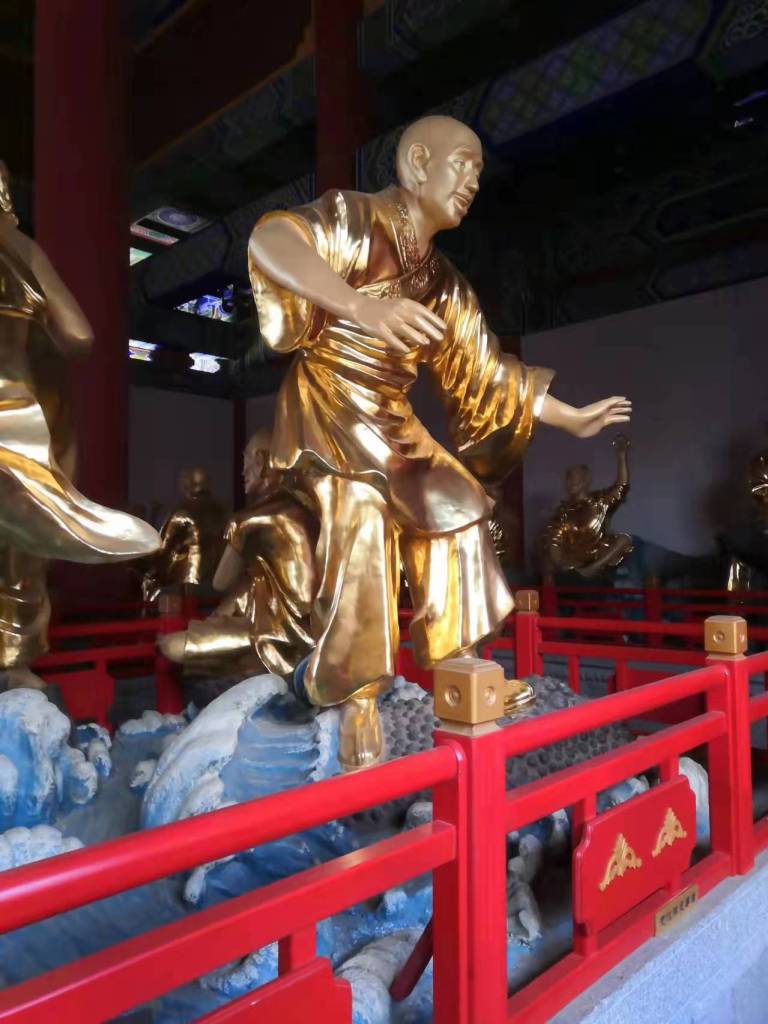
Interestingly as you get near the top you are greeted by two halls of arhats. Sculpted by an artist I also encountered (Well not literally I saw his other sculptures) in a little buddhist temple hidden up in the mountains overlooking Kunming. The artist was known as Li Guangxiu. In the 1880s he sculpted literally hundreds of absurd, life sized and quite frankly hilarious/creepy looking Arhats.
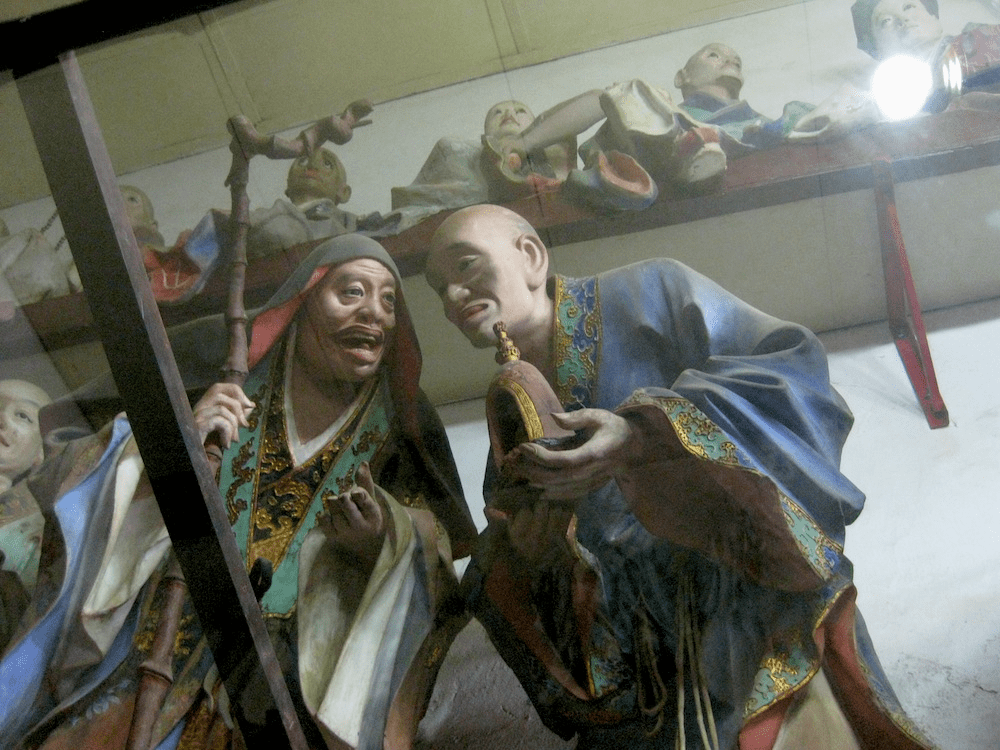
The ones found in the Bamboo Temple overlooking Kunming were hand painted by him and they’re absurd designs got him a lot of flack/trouble back when he first made them due to their rather undignified and at times bizarre designs.

Some even had super stretchy limbs/body parts.

Apparently before he retired he made another 800 and covered them in Gold Leaf in Dali. I took a few pictures of them. To be honest it was rather creepy to be walking up and down those long dusty corridors, poorly lit and surrounded by manic looking Arhats.


That being said empty/abandoned was how a lot of Dali felt. I was travelling at Christmas time which isn’t a holiday for most Chinese people, so that was one factor. The other factor was the sheer non-existence of foreign visitors from outside of China. The final factor was likely hesitancy to travel very far or very much during the pandemic. This resulted in a new difficulty for me. Finding where to eat.
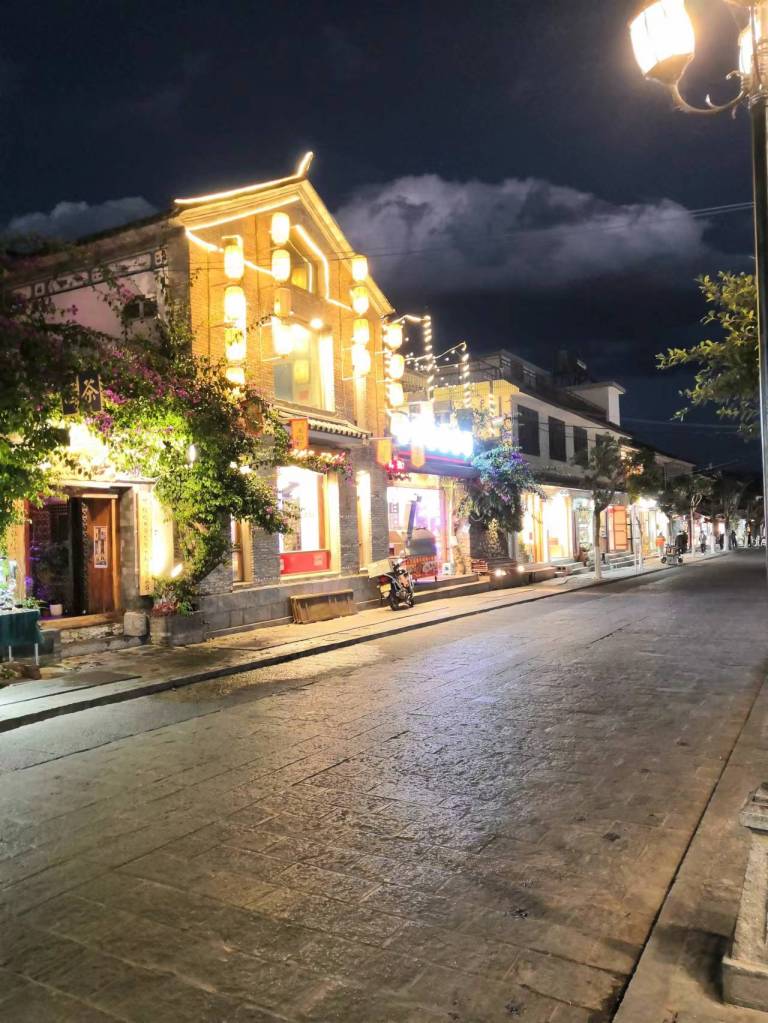
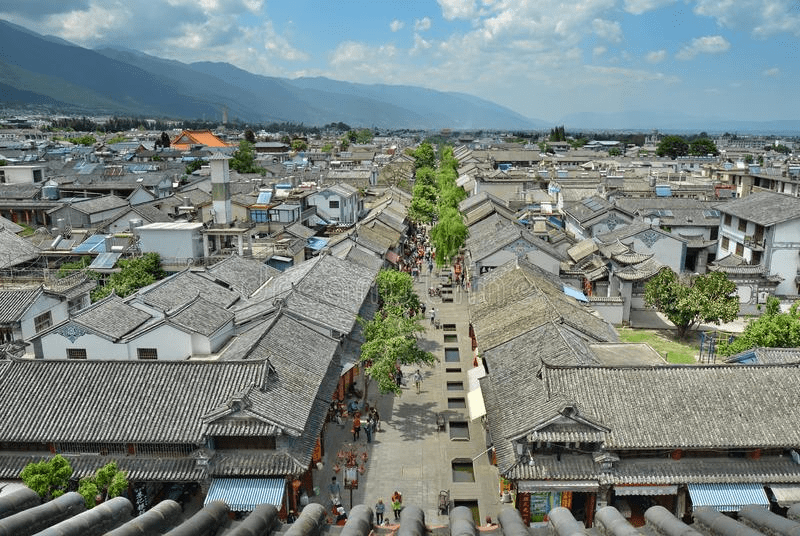
Normally my tactic is to just walk along the street and go into whichever restaurant seems to have the largest crowd of people in it. No luck this time as most restaurants were empty with just bored looking staff seated in them on their phones waiting for someone to come in. Furthermore my totally out of date Lonely Planet guide just brought me to non-existent restaurant after non-existent restaurant. Eventually I journeyed out of the Old City and into the new city where things were a bit more lively and managed to find a place that did some Dali famous dishes. Dali and all of Yunnan is well known within China for it’s Mushrooms and Lake Fish. This is when I came up against another problem whilst travelling in Yunnan, portion sizes. You see Chinese people normally eat together as a family or with friends and will order 3-9 different things which they then communally share. Consequently they don’t really make portions for just one person unless its a fast food place.
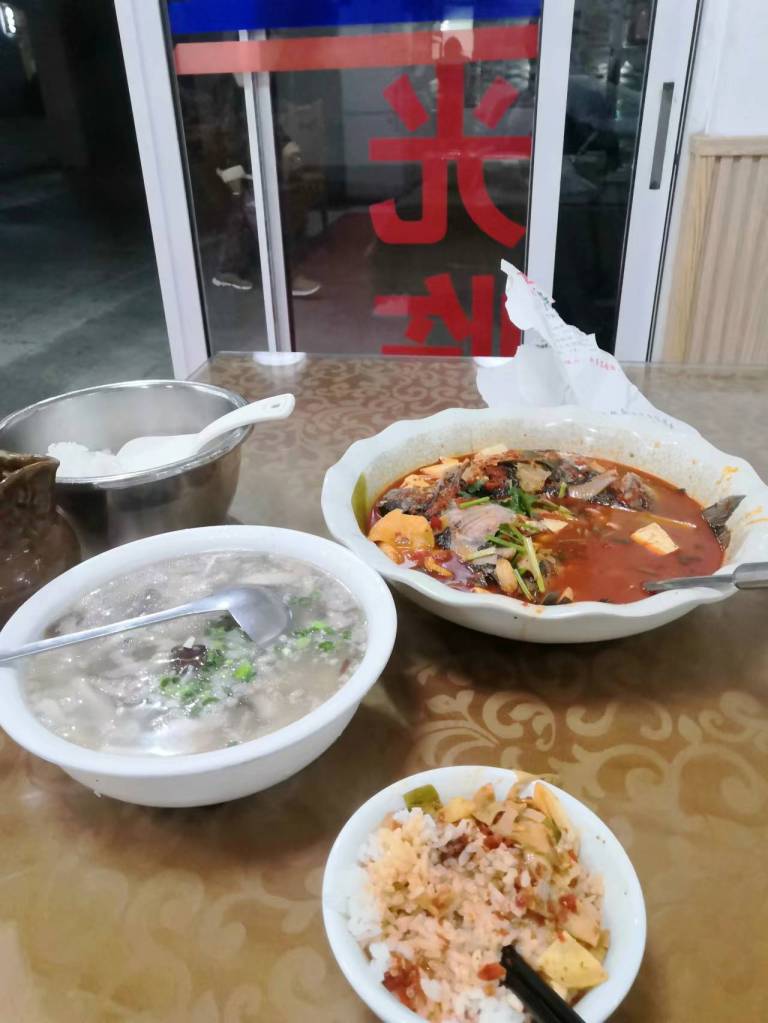
So yeah. That was a problem. Quite tasty though.
Interestingly Dali and Yunnan in general is also famous for its cheese. Cheese is not an overly popular food in China or atleast it hasn’t been traditionally. But many of the ethnic minorities in Southern China keep cows, goats, sheep etc. and milk them. Consequently a popular street snack in Dali is wrapped up and fried cheese which they then sprinkle sugar onto.

It looks a bit like this.
The weather was quite good here most days and I decided to spend one day just cycling along Lake Erhai. This quite long lake which is roughly shaped like a human ear (Hence the name which basically means…ear) I set off to visit Xizhou, a small ancient town about 30 kms north of Dali. The lake has a really nice and well pathed bicycle path along it littered with guest houses, hotels and people posing for wedding photographs.
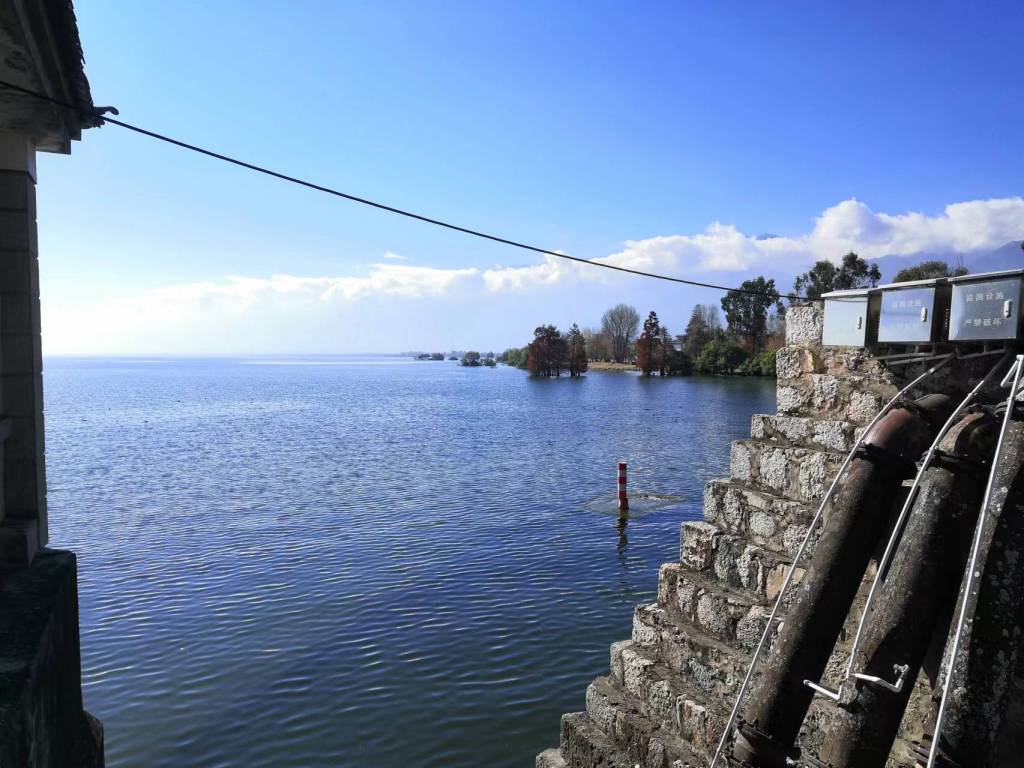
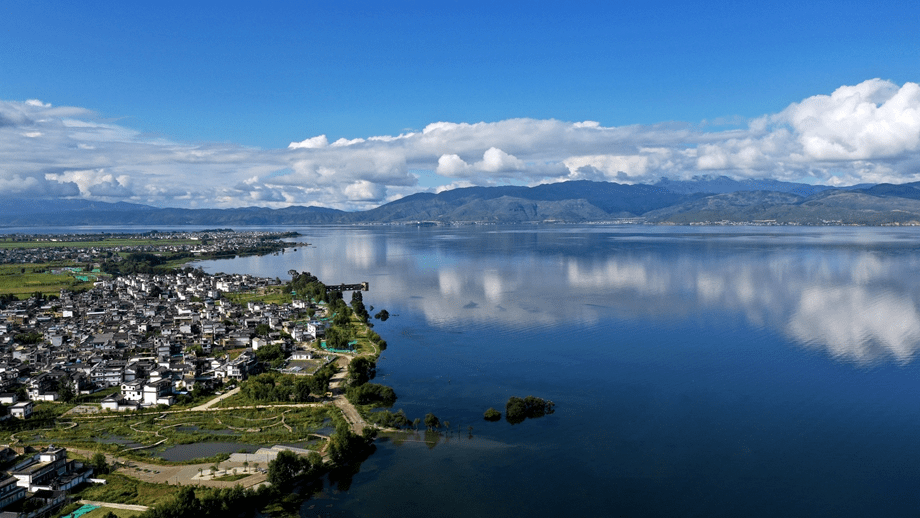
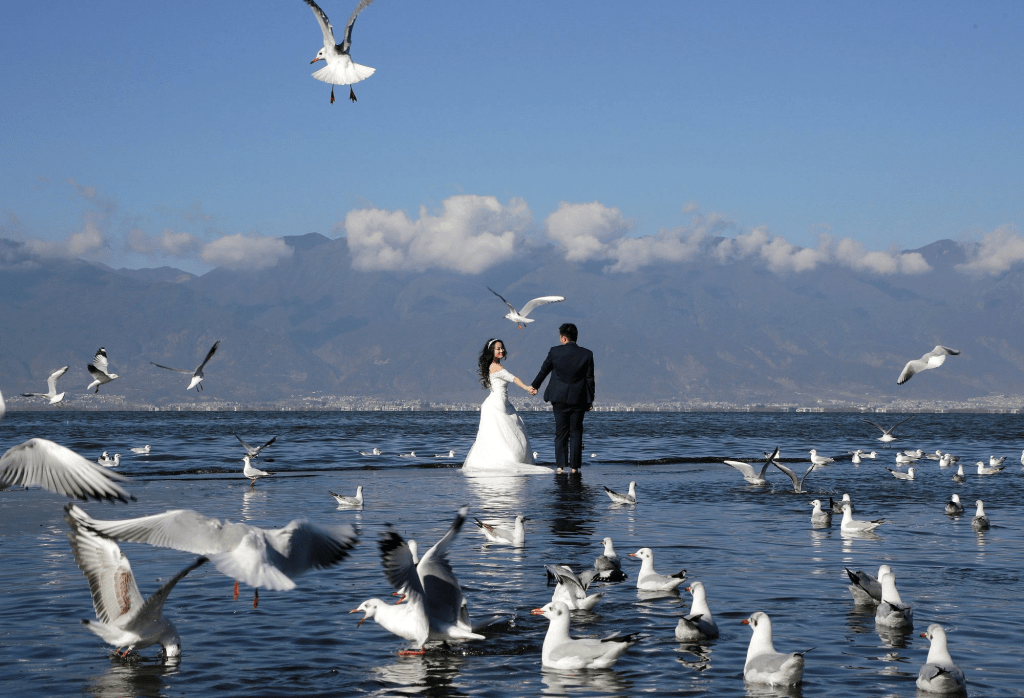
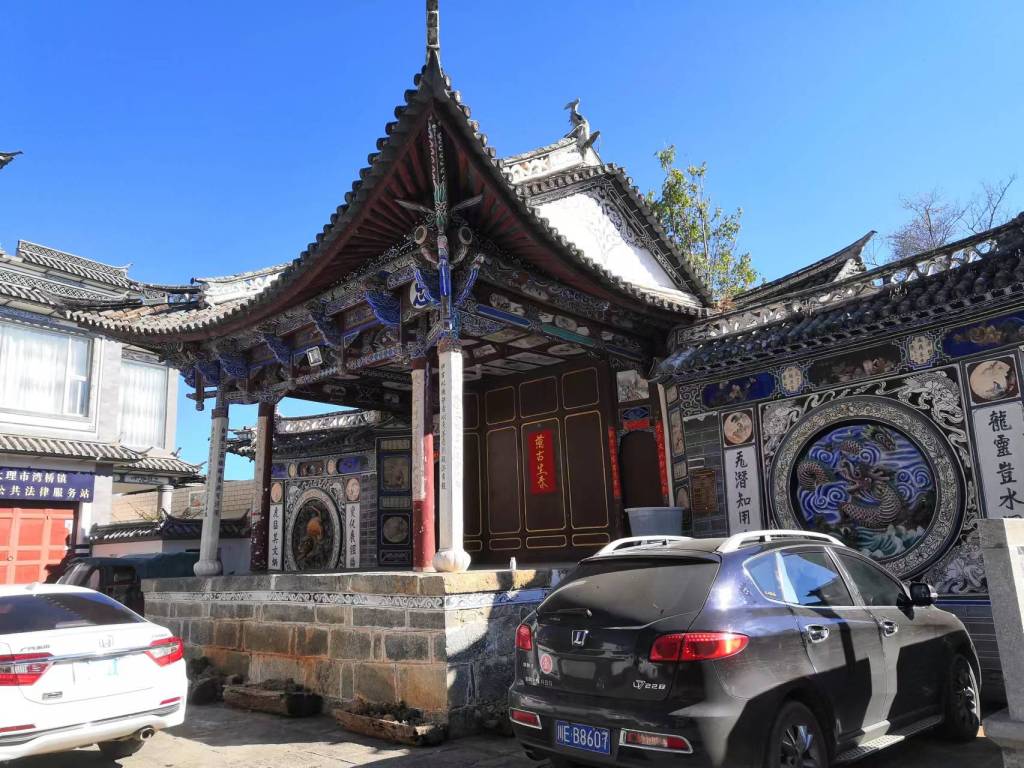
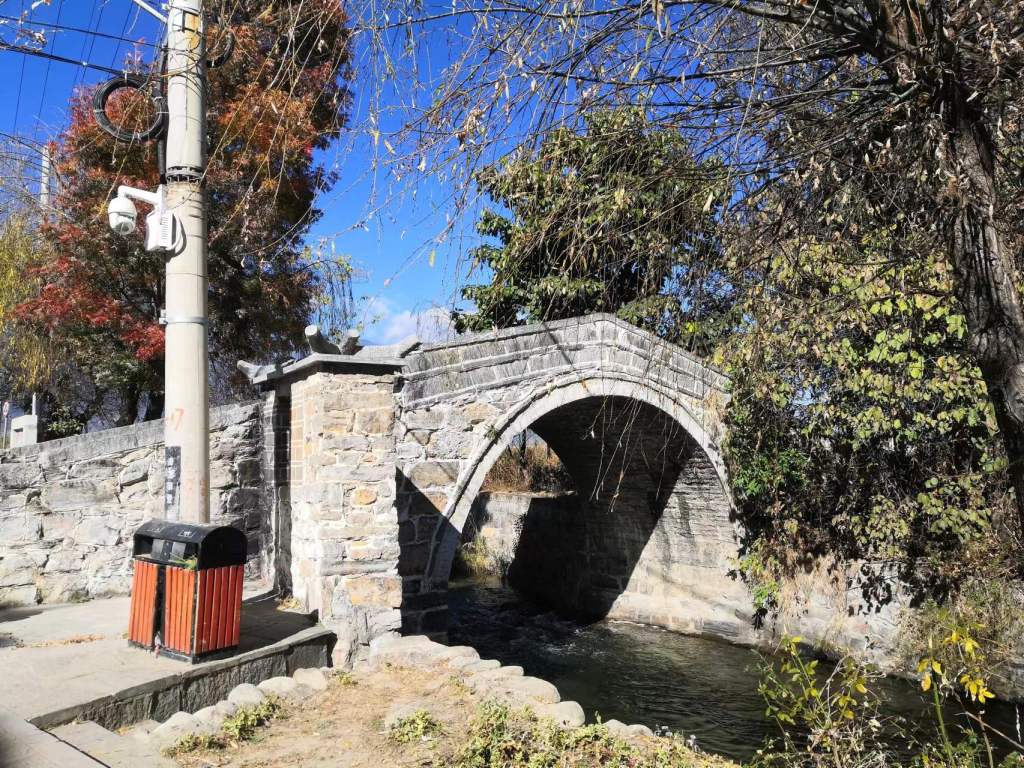
It was a rather interesting ride as well as whenever I got bored of the lake view, I could turn off and into one of the dozens of villages which run along the front of the lakes. There are so many tiny little villages which have been there since the Ming Dynasty with many tiny temples and 600 yearold stone bridges spanning the little rivers which flow down from the mountains and into Lake Erhai.

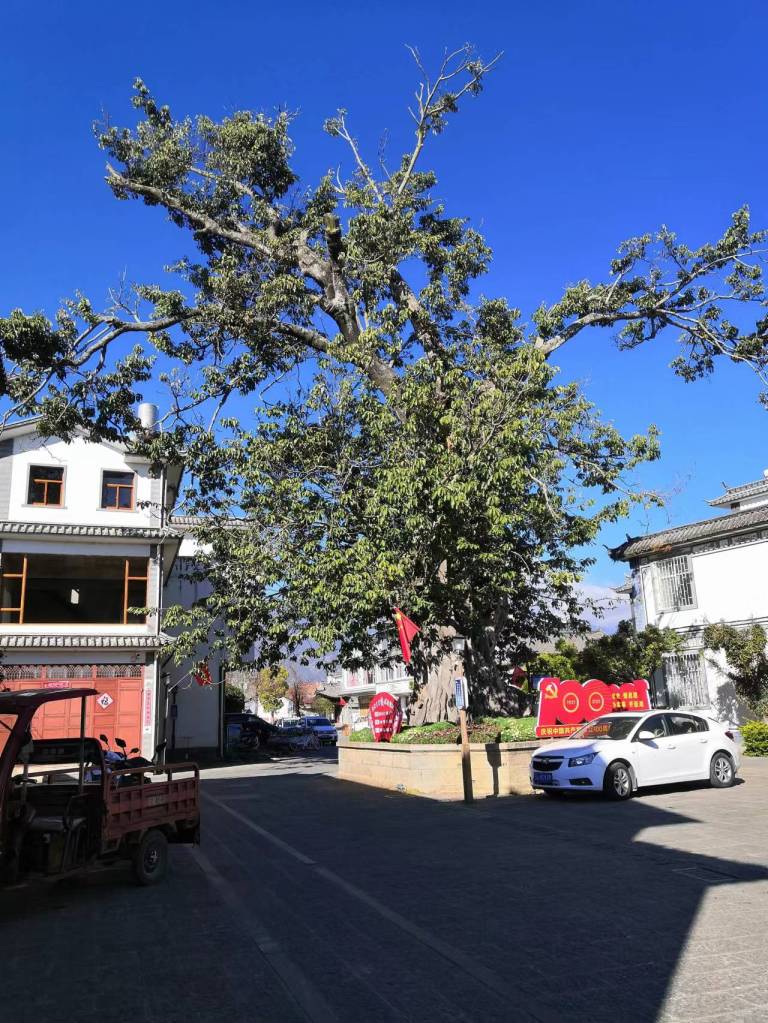
Many of these villages have a big Bodhi tree in the centre of the village square.
After I got back into Dali I decided to drop off my bicycle and go up to the highest peak overlooking the city. This was probably the longest cable ride I’ve ever been on as the peak actually lies behind several other mountains which you need to scale and then zip across, so oddly a lot of the ride was actually quite flat. Altogether the cable car took 40 minutes to get to the top.
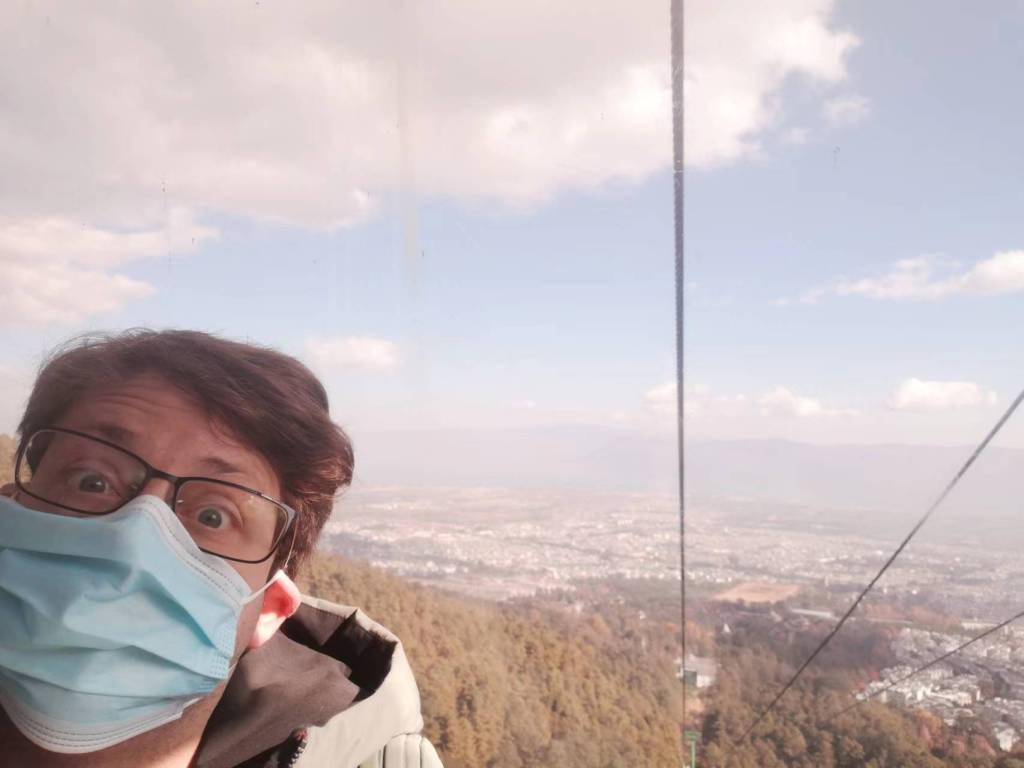
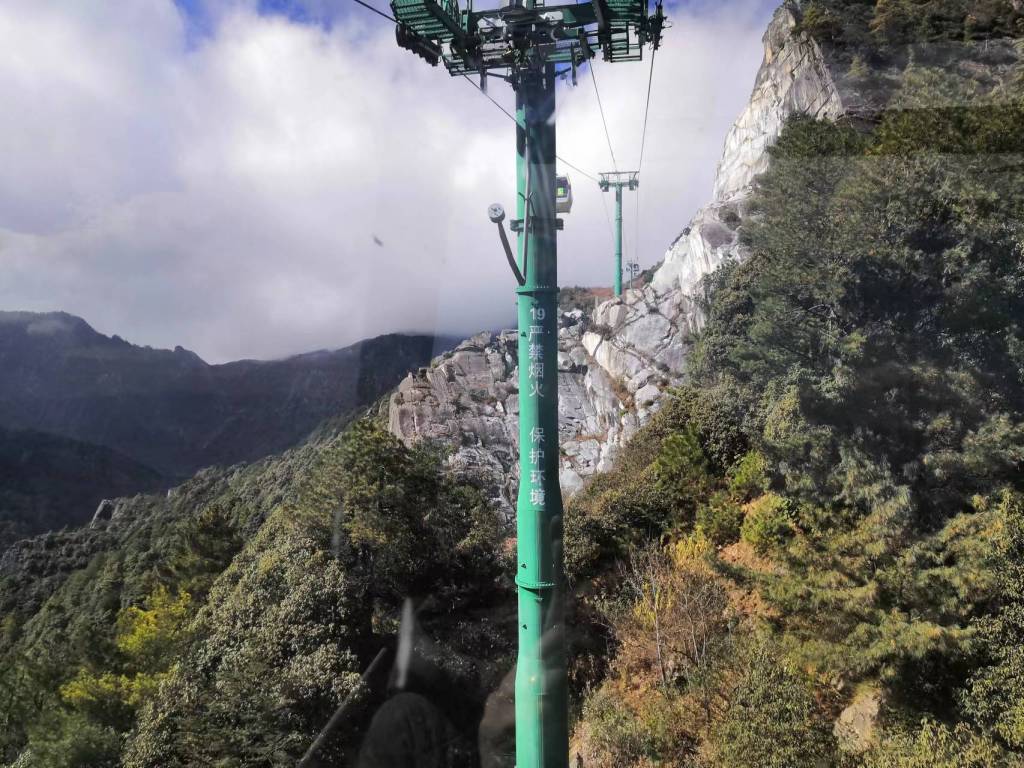
Once I got to the top I immediately noticed the lack of oxygen. I had previously laughed at the idea of buying canned air (Which many of the shops sell to would be hikers) but a combination of not having brought my winter jacket and the sheer elevation, at which level there was snow, did make me lose my breath a bit.

Also this sign at the men’s restroom made me laugh a bit.
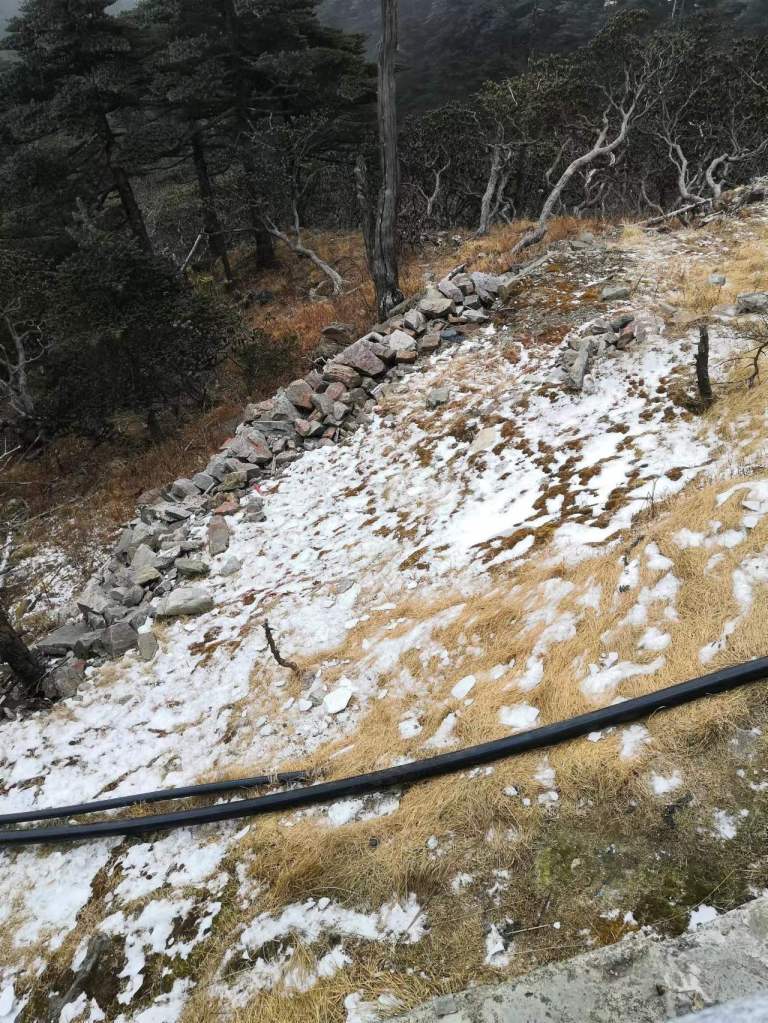

All those steps to get to the top of the mountain also probably didn’t help much.
Near the top of the mountain is Ximatan glacial lake. It is said that Kublai Khan (Grandson of Genghis Khan) stopped here briefly with his horses to give them a bath in this big natural and very highly elevated pool

Sadly what I saw looked nothing like the pictures. Just a barred crater of slate.

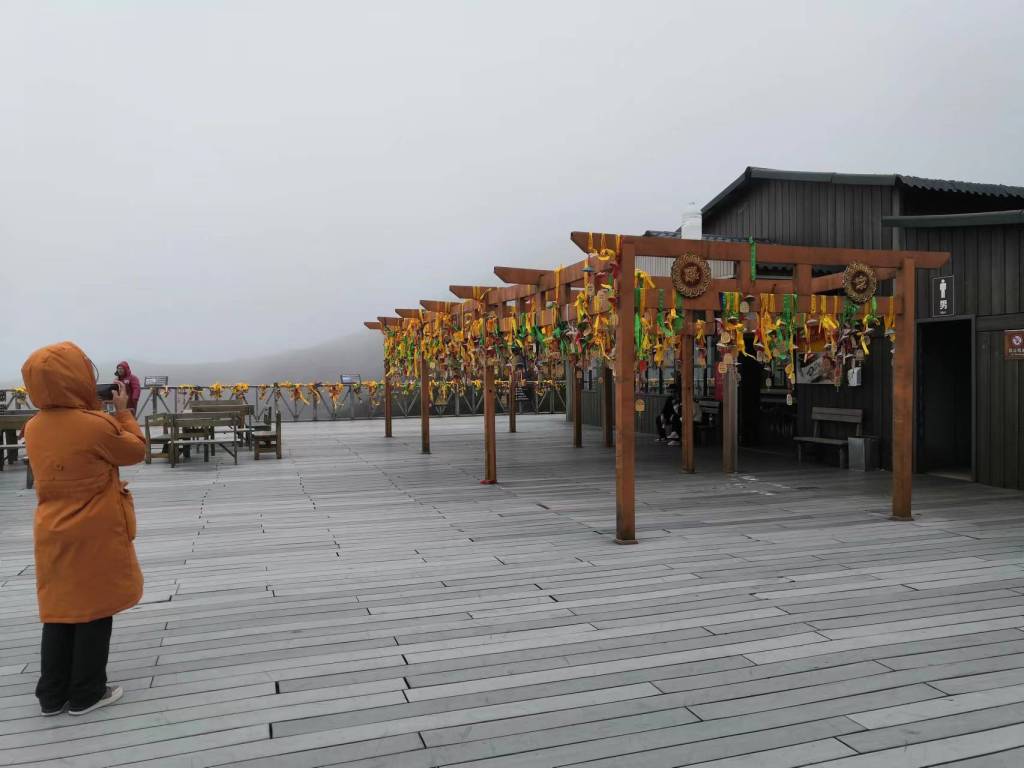

Unfortunately the view from the top was obscured by fog and cloud, so didn’t get to see much from the very highest point.
That being said the view of Dali going up and down along the cable car line was fantastic!
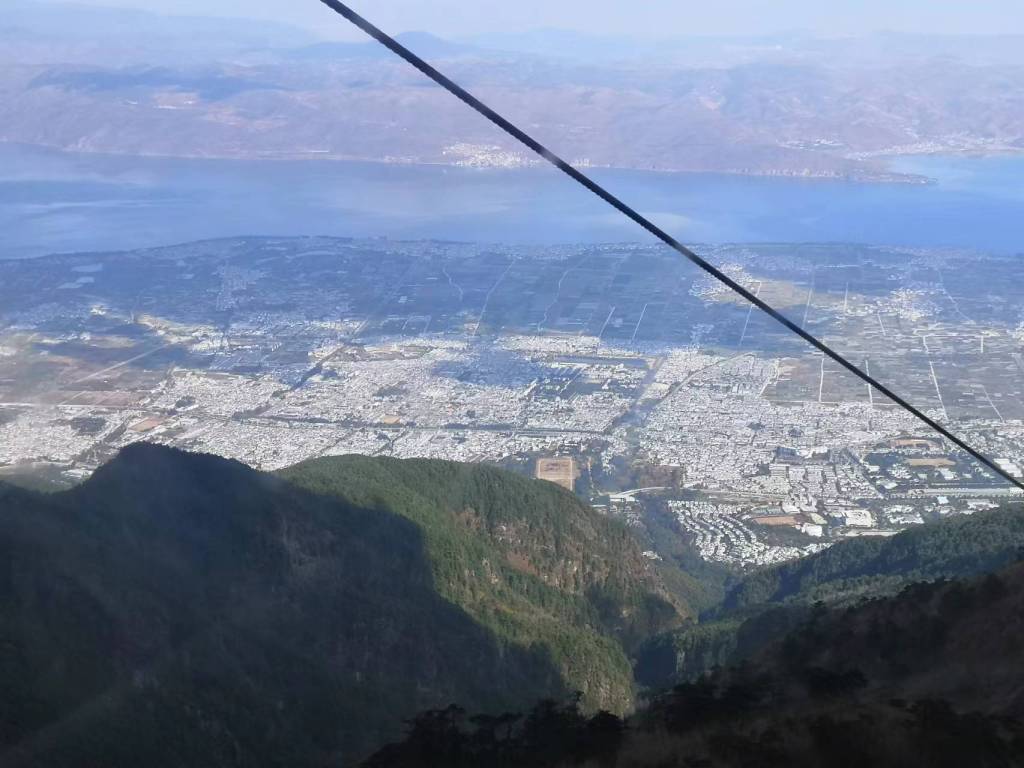
After I got back down and more oxygen in my lungs I saw I had enough time to do something else, so I sought out Dali’s OTHER pagoda. The one no one visits. I had spied it from high up on the cable way and saw that it was easily walkable from the calbe-ways parking lot. Unfortunately this did take me through some wasteland and when I finally got close to the pagoda and I was blocked off by a 400 year old stonewall.
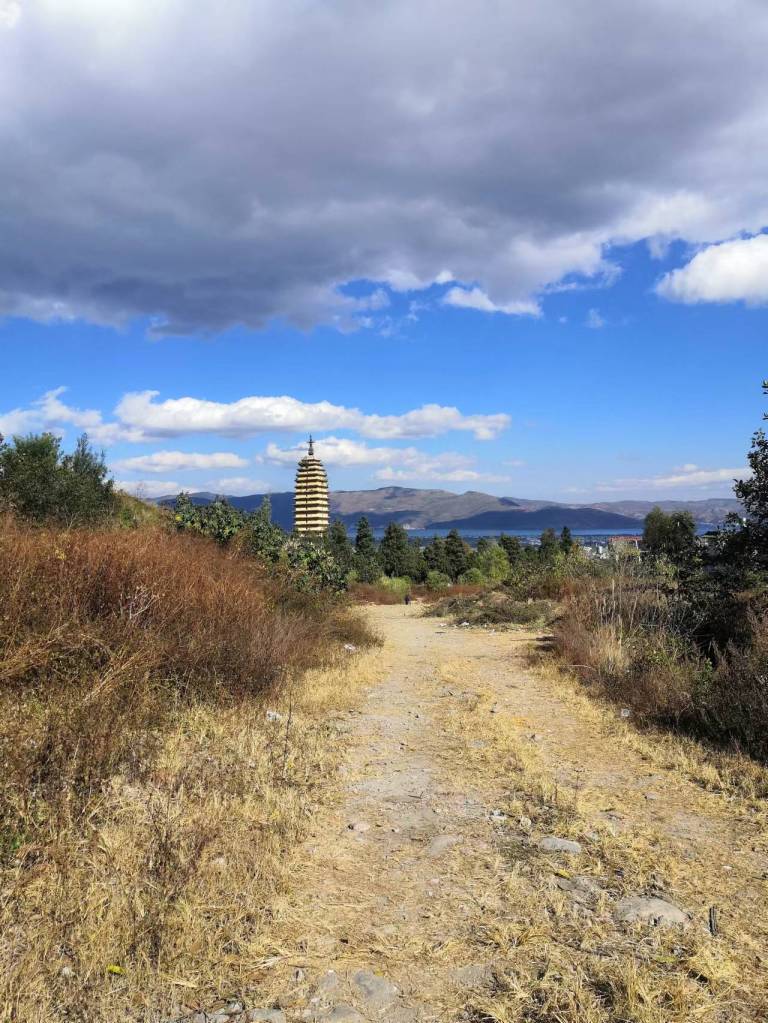
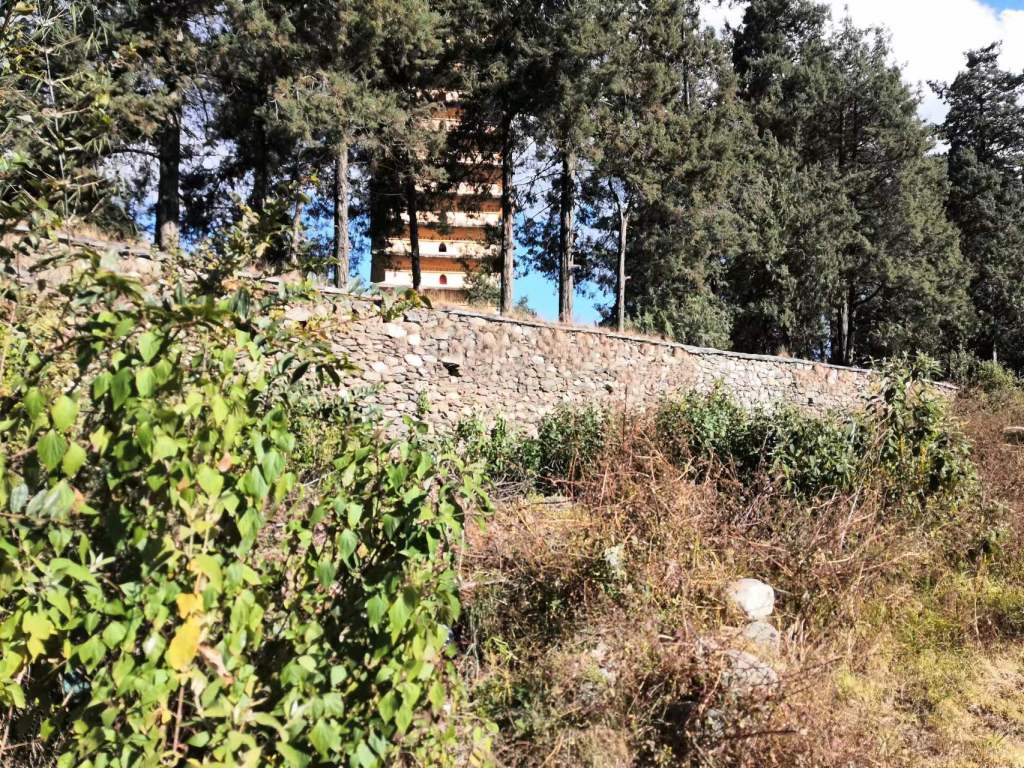
But ever foolhardy and undeterred I decided to follow the wall towards the nearby residential area and found my way up a path and through a half open construction gate to find this.
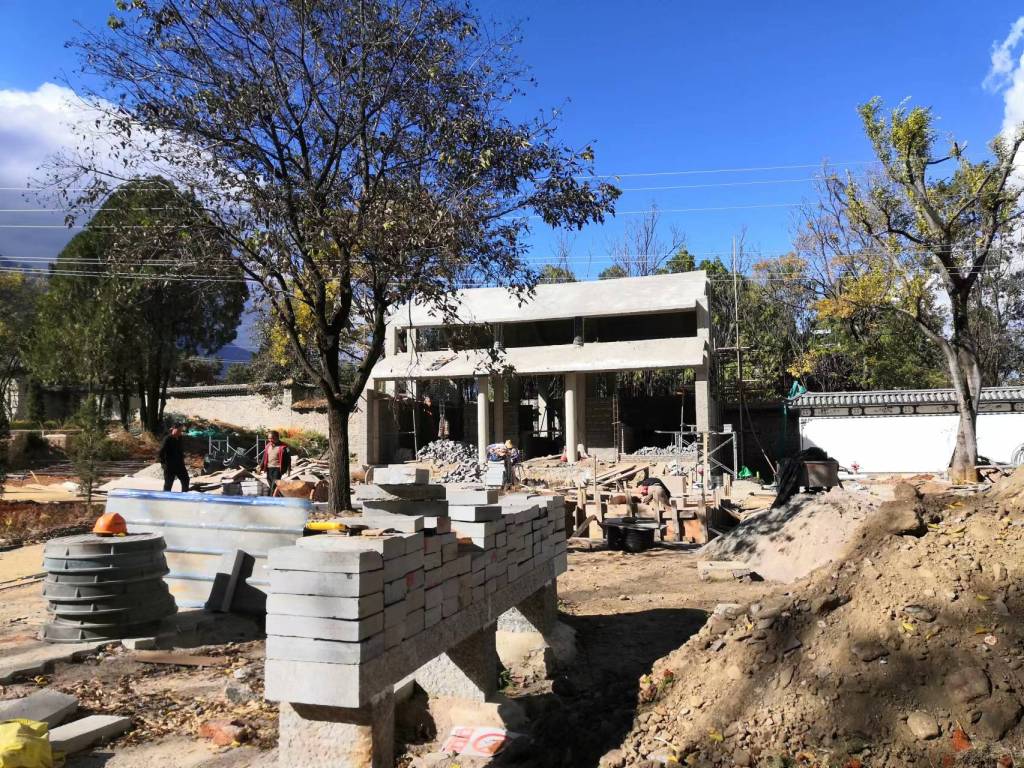
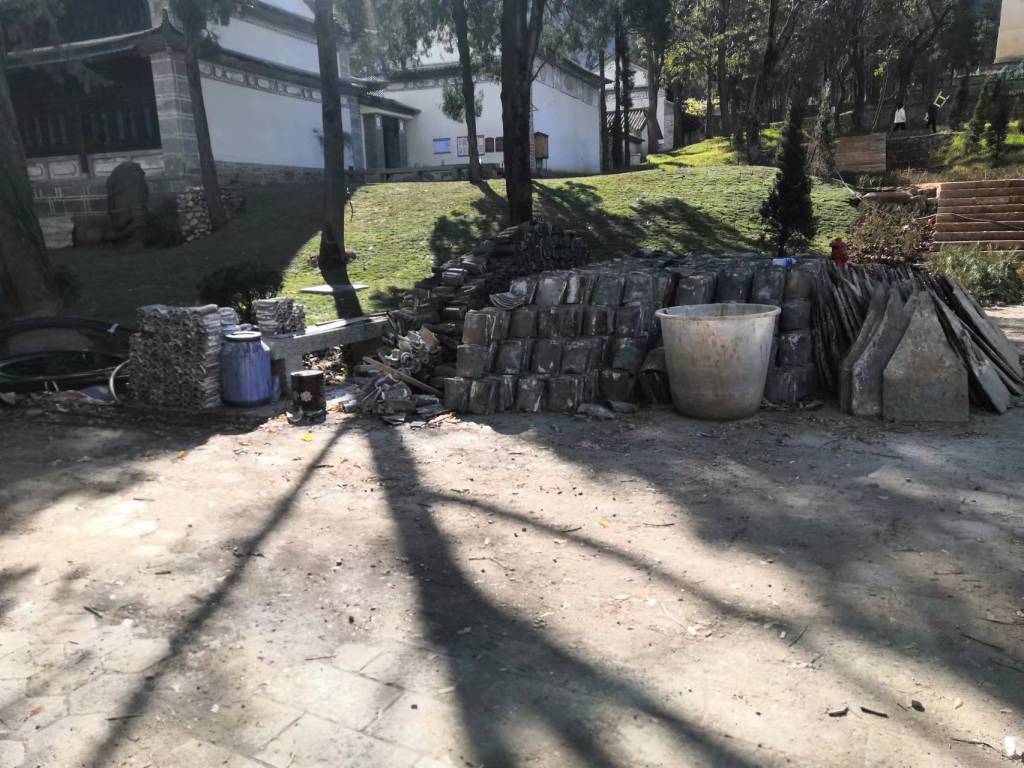

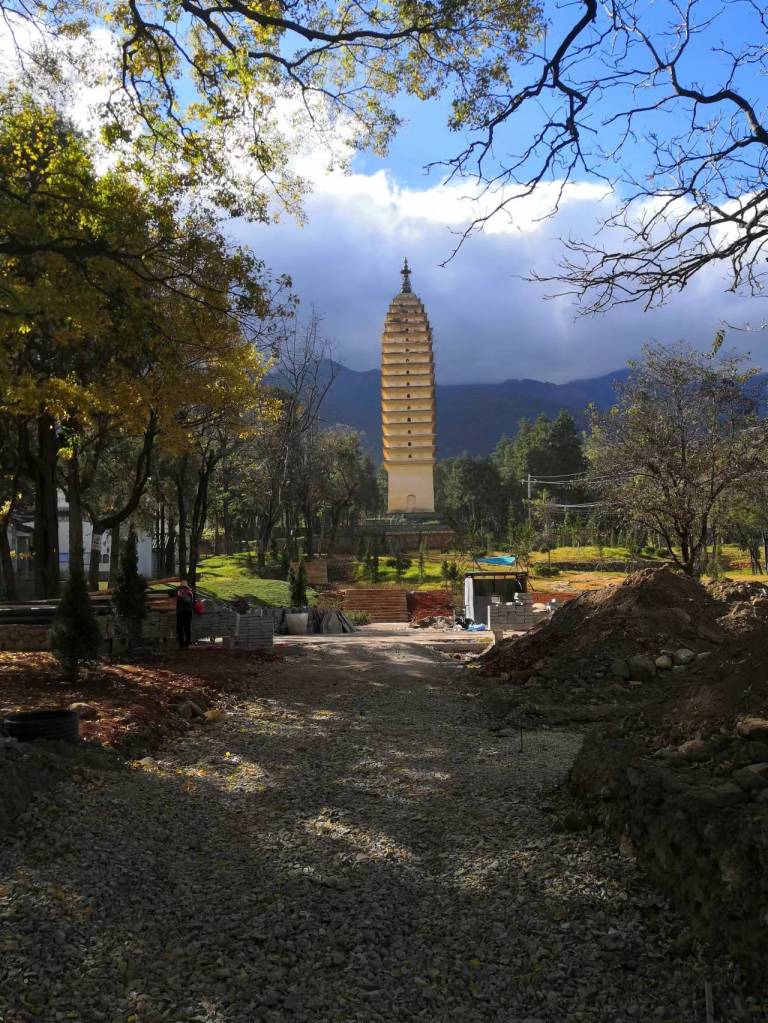
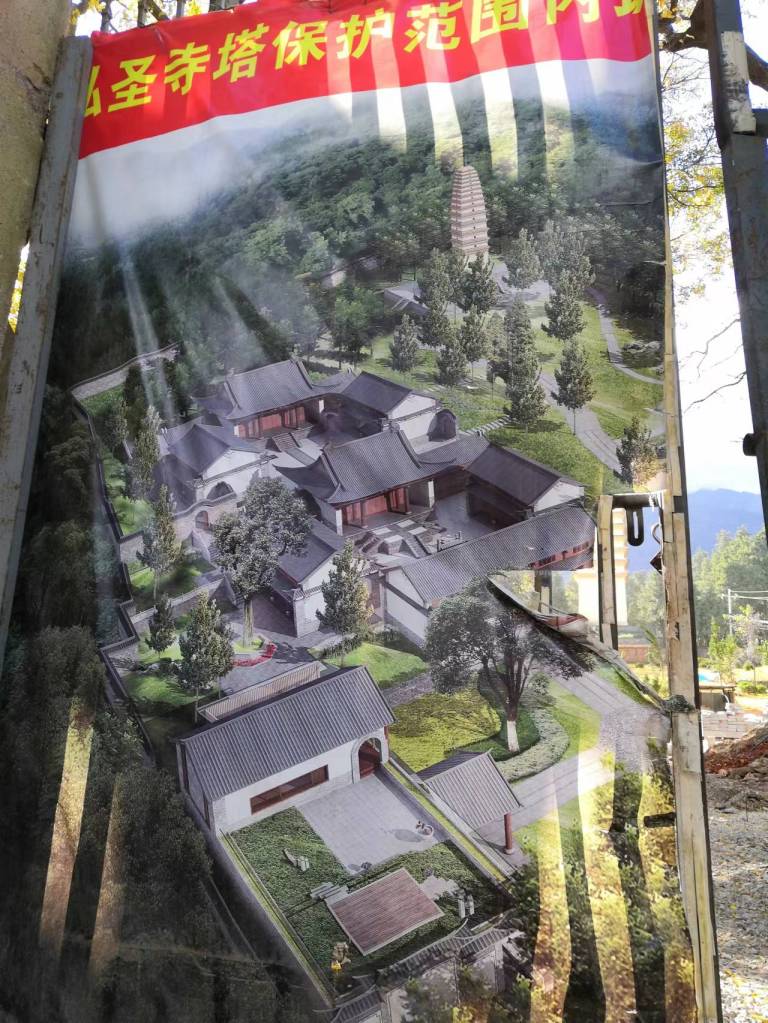
This temple complex was utterly gutted and destroyed during the Cultural Revolution, mostly be teenagers and young adults spurned on by Chairman Mao to destroy the old. There is something funny about the same young adults (Or possibly not them specifically) 50 years later being the ones primarily volunteering to rebuild them. Notably all of the workers looked to be in their early 60s or older. I’ve mentioned before on this blog how in China often the beautiful ancient temples you see are….largely reconstructed. It would seem all that survived here was the Pagoda and in a few years (Or months) they intend to reopen this temple complex and it will look something like this.
I was happy enough to sneak around, take some pictures and do a very tourist photo with the pagoda.

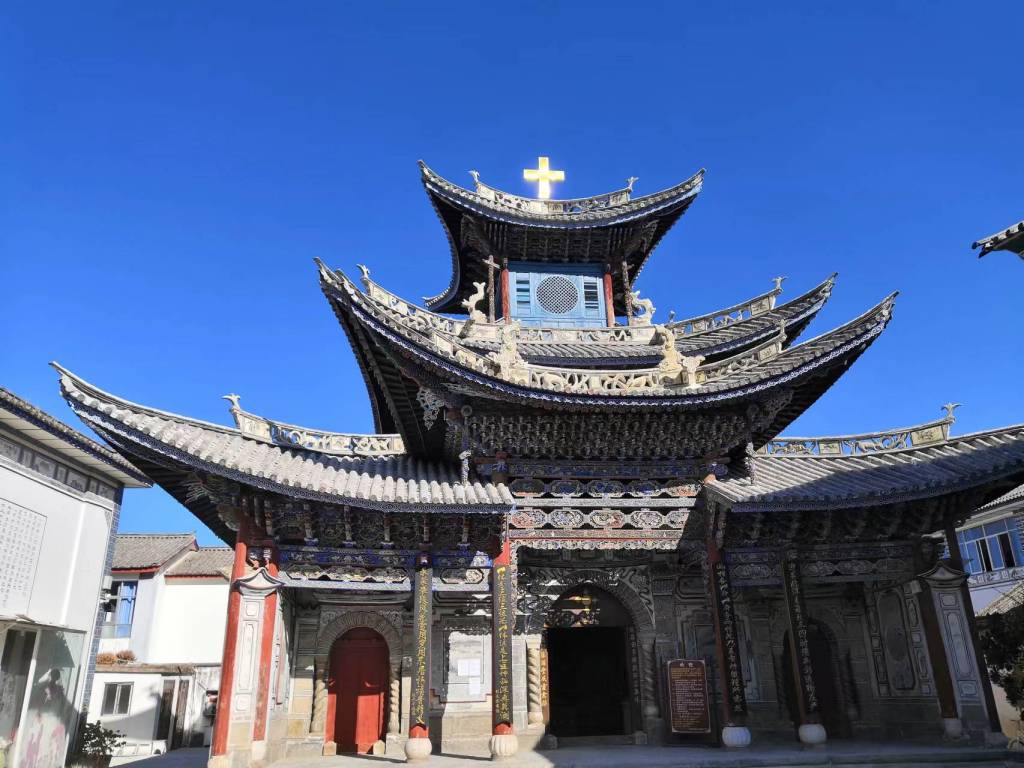
I made one final visit to the cities old Catholic Church (Built in the 1860s by French Missionaries). Oddly enough it is designed largely using Chinese architectural features though the murals are certainly old and new testament. The interior itself looks quite Catholic.


My next stop was going a bit further north to Lijiang. Lijiang sits at the very start of the Himalayan mountains and is another popular tourist stop for people travelling across Yunnan. Famous for it’s mountains, old city and the nearby Tiger Leaping Gorge.
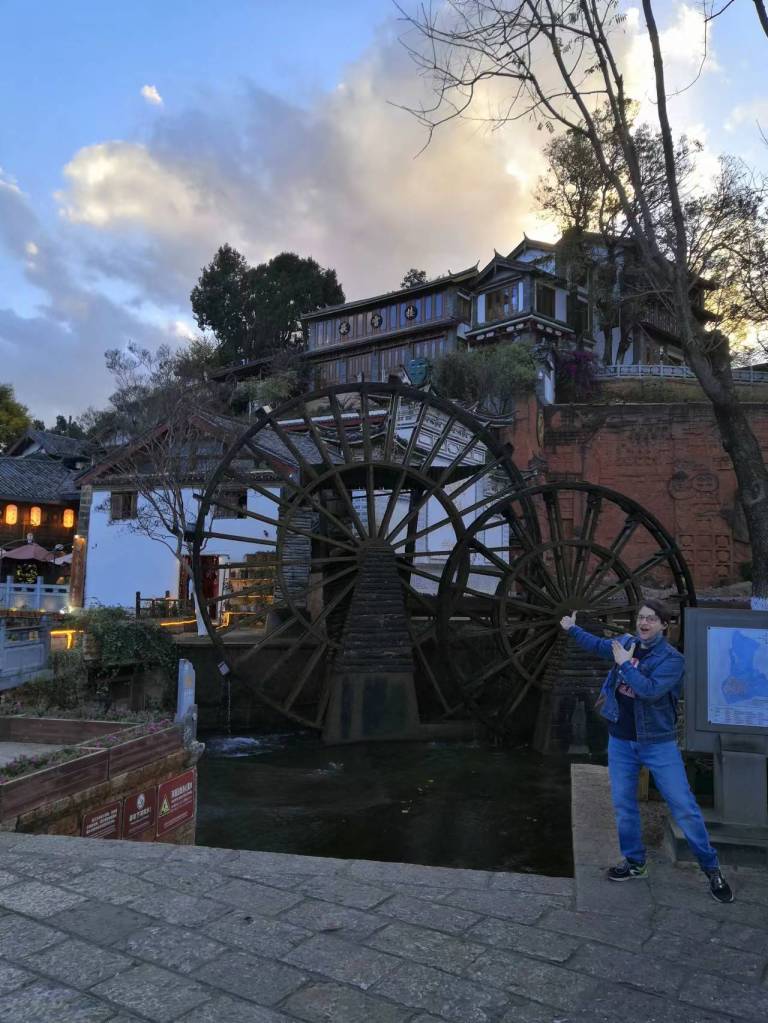
Oh and this water wheel…for some reason. Oh and also really good Bai cuisine like this spicy pork!

They also have a very nice giant statue of Mao.

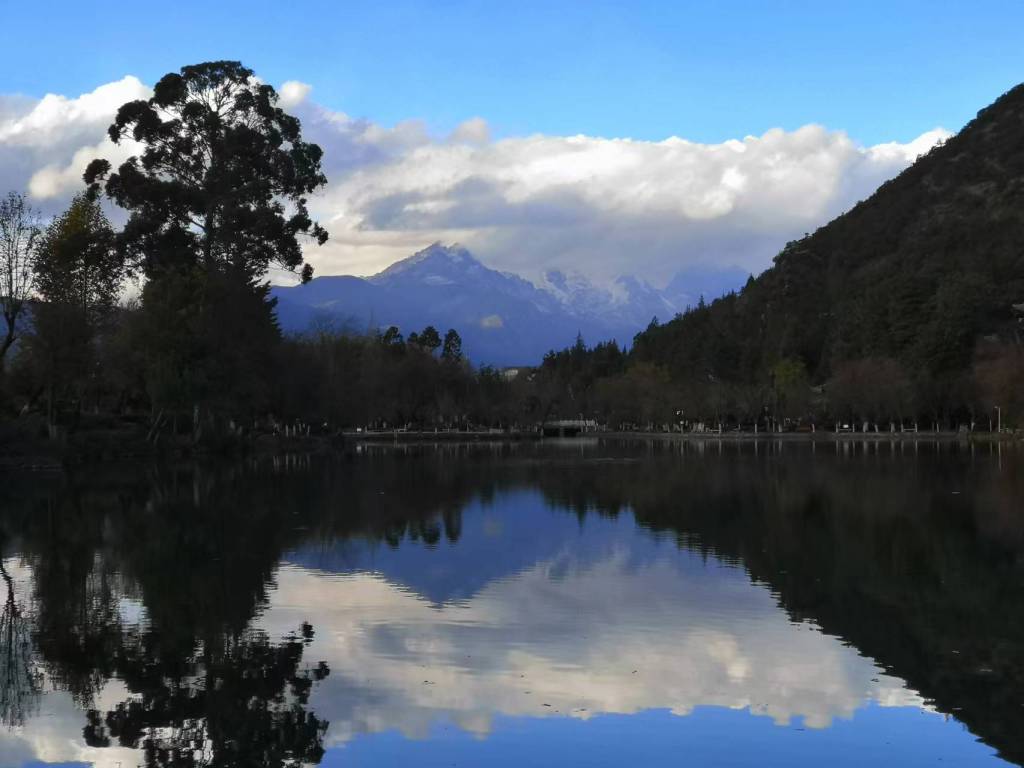
Also this really cool Imperial garden which the Emperor used to visit which has a great view of Jade Snow Dragon Mountain.
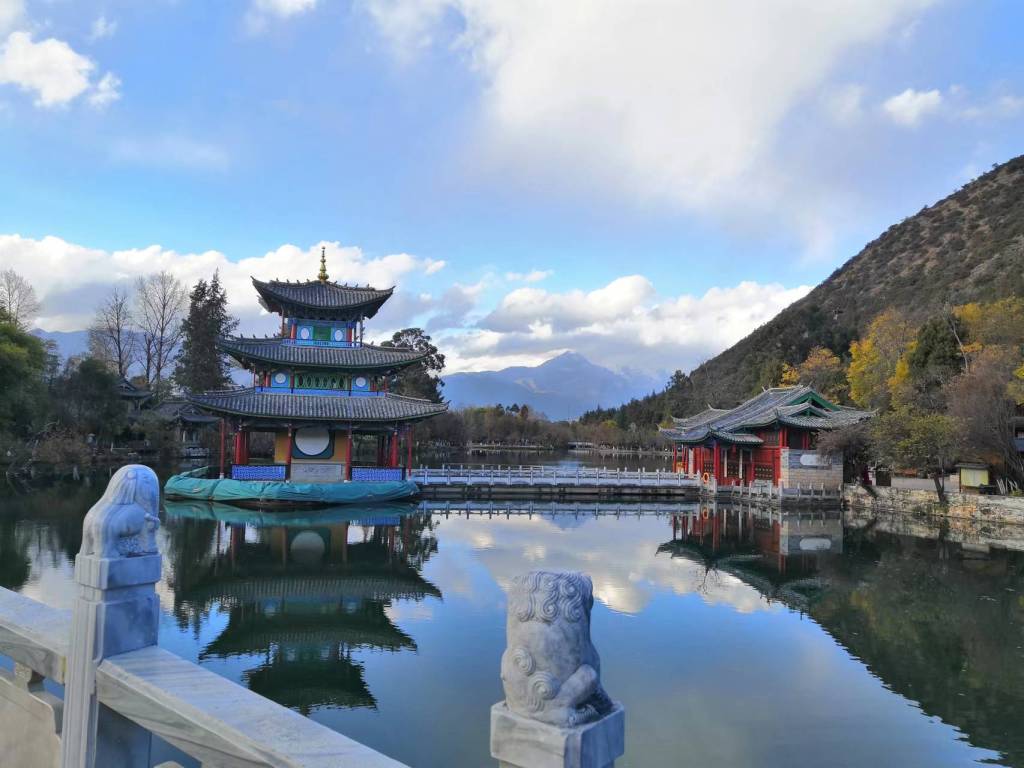
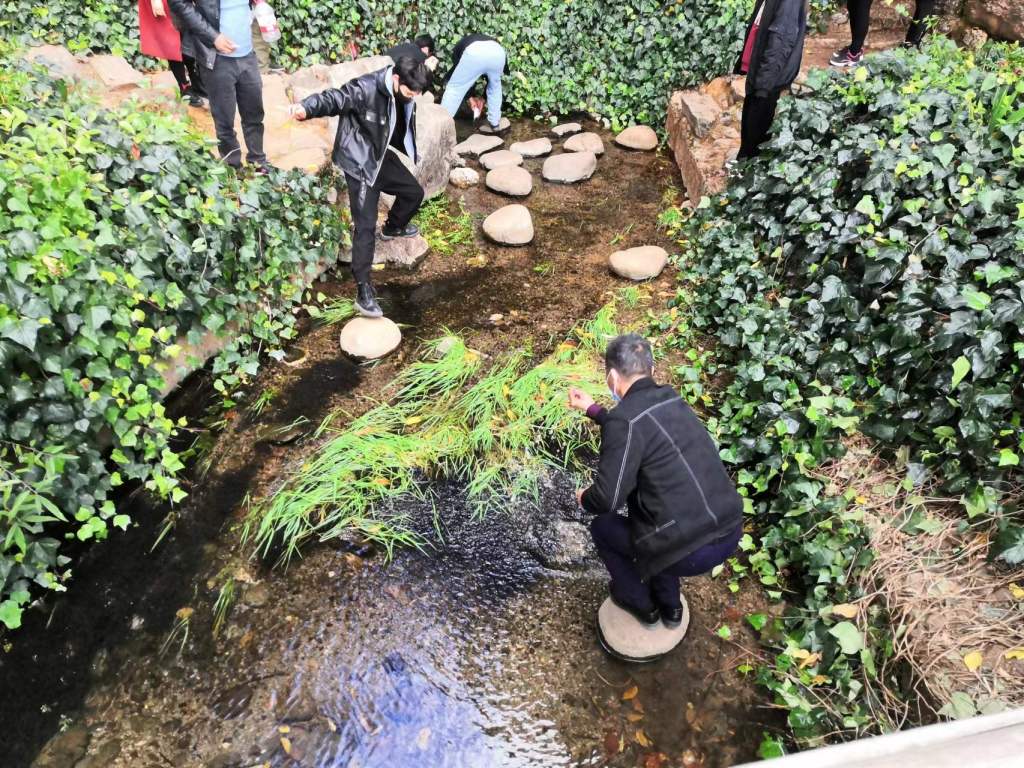
Though it was a bit annoying/sad to see the locals bullying some minnows swimming in an offshoot of the main mountain pool.
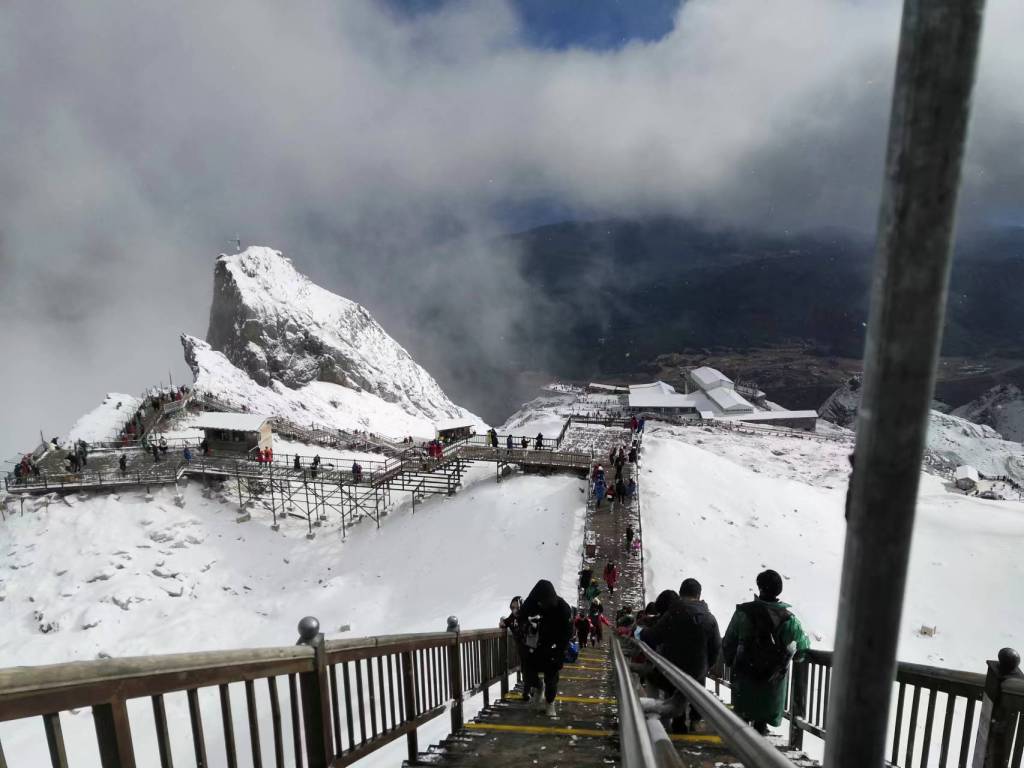
This time I prepared myself better for the high elevation as I knew it would be a 1000 meters higher than the mountain in Dali so I put on my winter clothes and took yet another cable car up the side of a mountain. Jade Snow Dragon Mountain actually has the highest elevated cable car in all of china and perhaps the world as it soars 4,600 meters up to the top of the mountain, well near the top. Once you get up there, you still have a few hundred meters of stairs to climb. The snow is so thick up there that a team of snow-blowers have to periodically clear snow from the stairs.
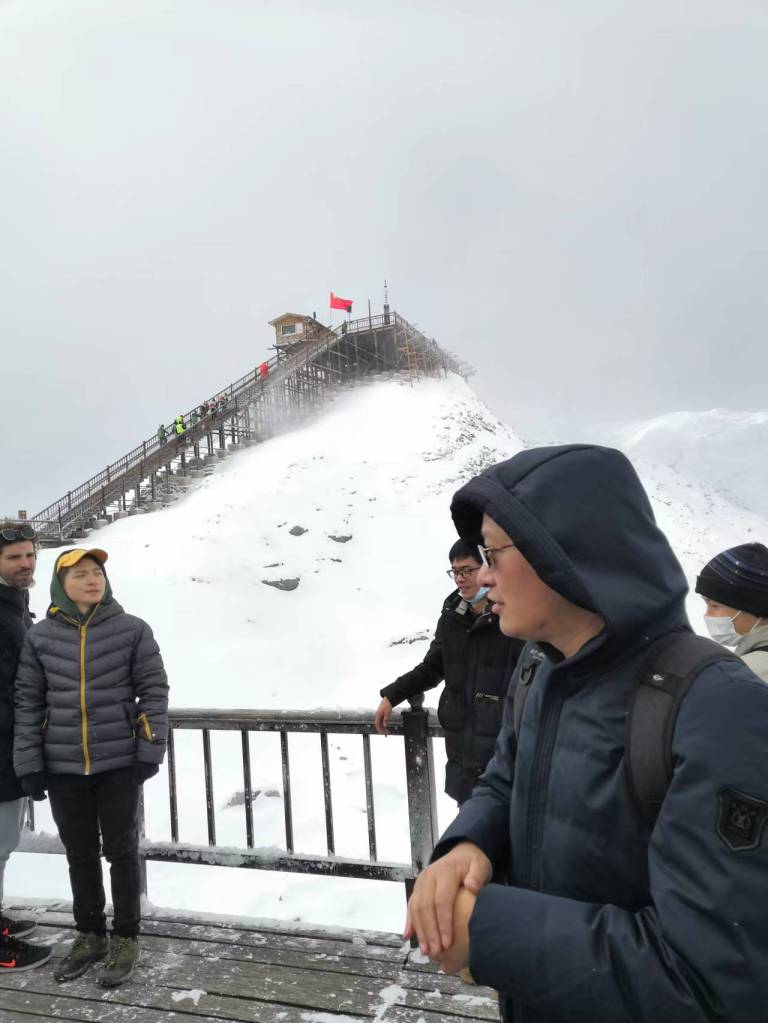
Up here I caught the attention of a young Chinese man named Wei who had enough of a grip on English to strike a conversation with me. As we were both travelling alone we decided to spend the rest of our time in Lijiang together, which proved quite advantageous as it gave me someone else to take photos of me with and a travelling companion for a few days.
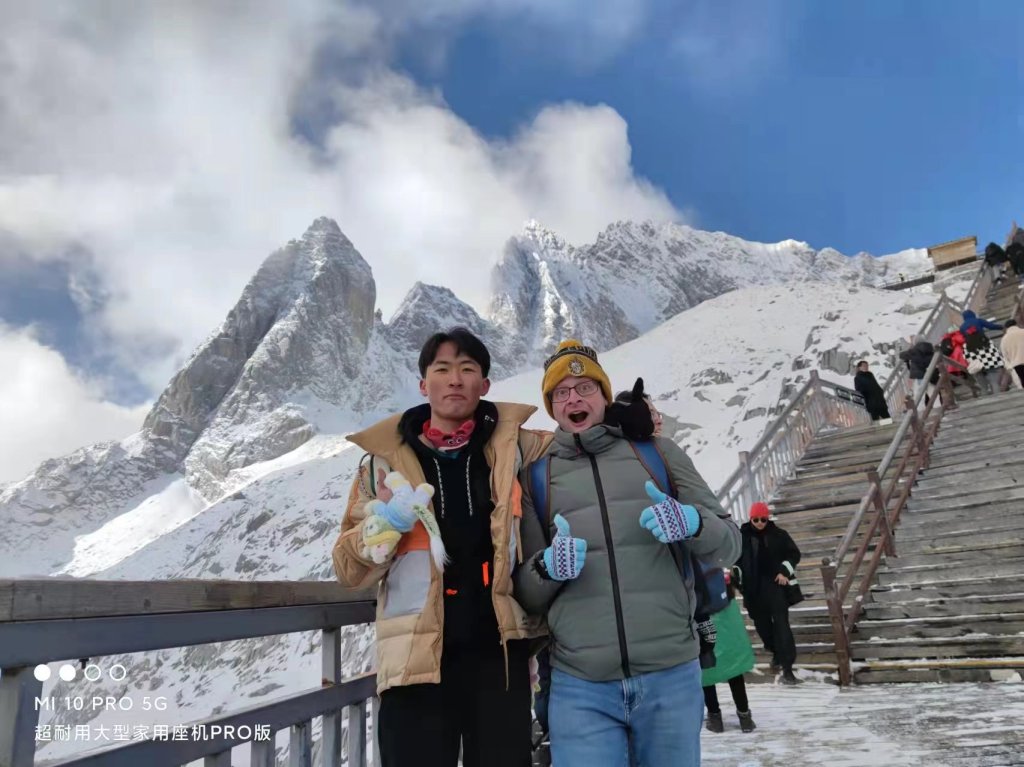
After checking out the peak we headed back down to one of the big spill off rivers that flows from the mountain wherein the bottom of the river is composed of fine grey calcium. This means that when the sun is out and the sky is blue the water looks about as aqua blue as a toilet bowl full of cleaning fluid.

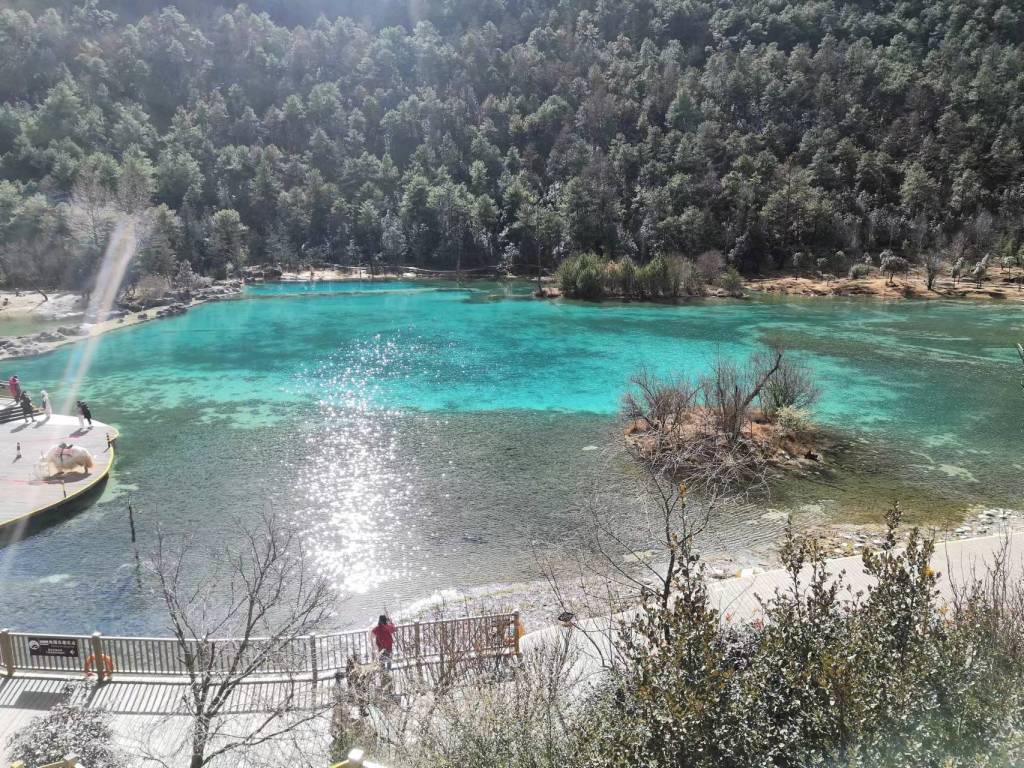
It also has some really pretty water falls as the river drops suddenly with rock formations repeatedly.


I met up with Wei again that afternoon and took him to the one popular Western restaurant in town which was having a Christmas party. Rather than order the turkey however I convinced him to try something utterly new, Burritos and nachos. Mexican food is growing more popular in China, especially in the big cities like Beijing and Shanghai. But it is still pretty uncommon.
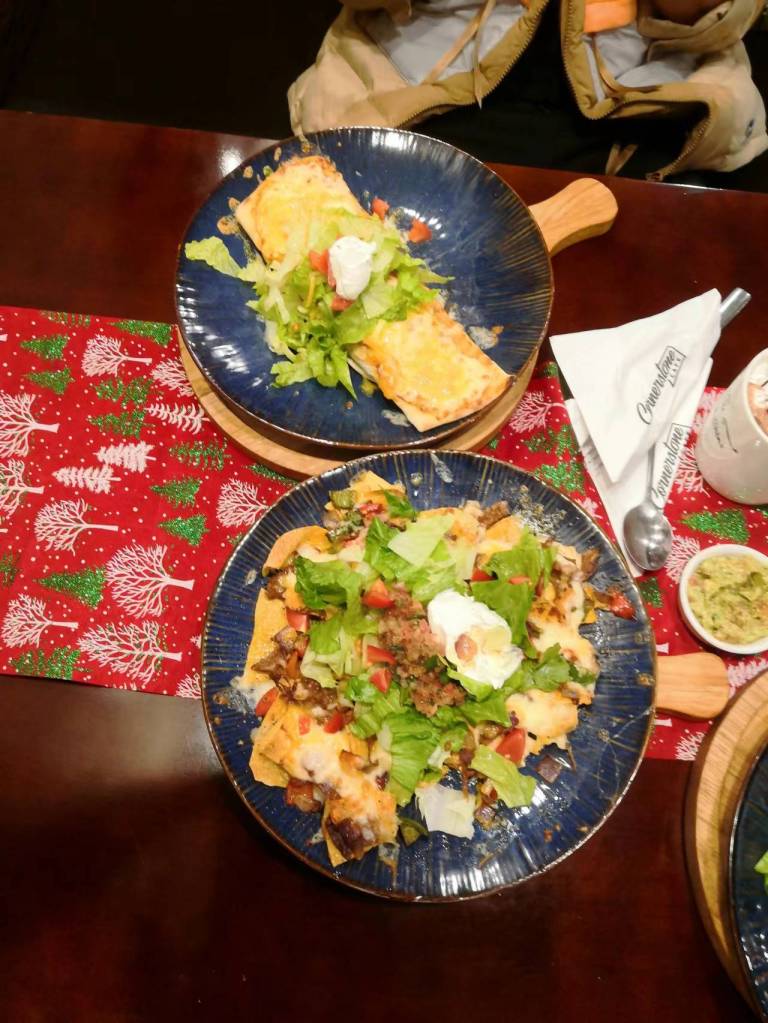
He was happy to try it out but ultimately wasn’t very impressed. Sadly this was probably one of the better Burritos I’ve had in China, though it was a bit odd that they put cheese on the outside. I think it was just too heavy for him as they were exceptionally large and dense.
The next day we got the owner of the hotel I was staying at to give us a ride to Tiger Leaping Gorge. This is a very deep gorge which can take usually two days to hike through. Instead we cheated and drove to the middle point wherein the gorge gets its name sake. Supposedly a tiger was once seen jumping from one side of the gorge to the big rock in the middle and then jumping again to the other side of the river.
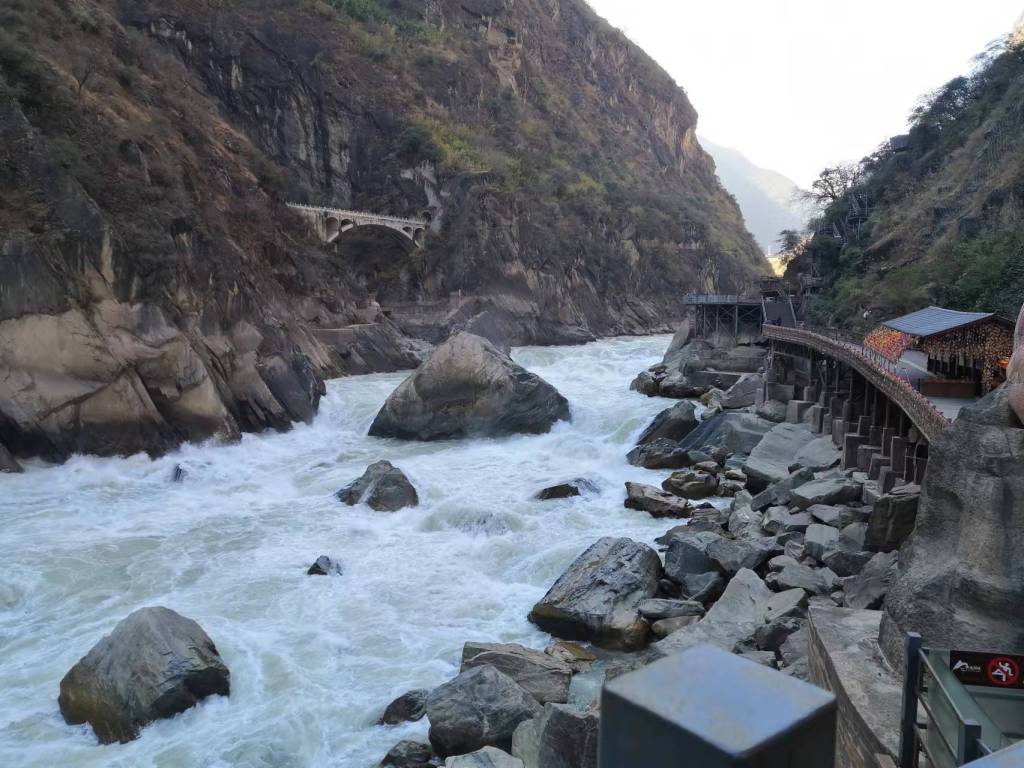
I guess a tiger coooould make that jump. Once more we were greeted by amusing signs poorly translated into English.


I felt compelled to try and break this rule. Apologies for the low resolution.

Next stop was the ‘First Curve’ of The Yangtze River. This is the first major point in which the Yangtze river makes a sharp turn and turns from heading south into Myanmar and instead veers sharply to the east and heads through the middle of China before eventually hitting Shanghai.

`

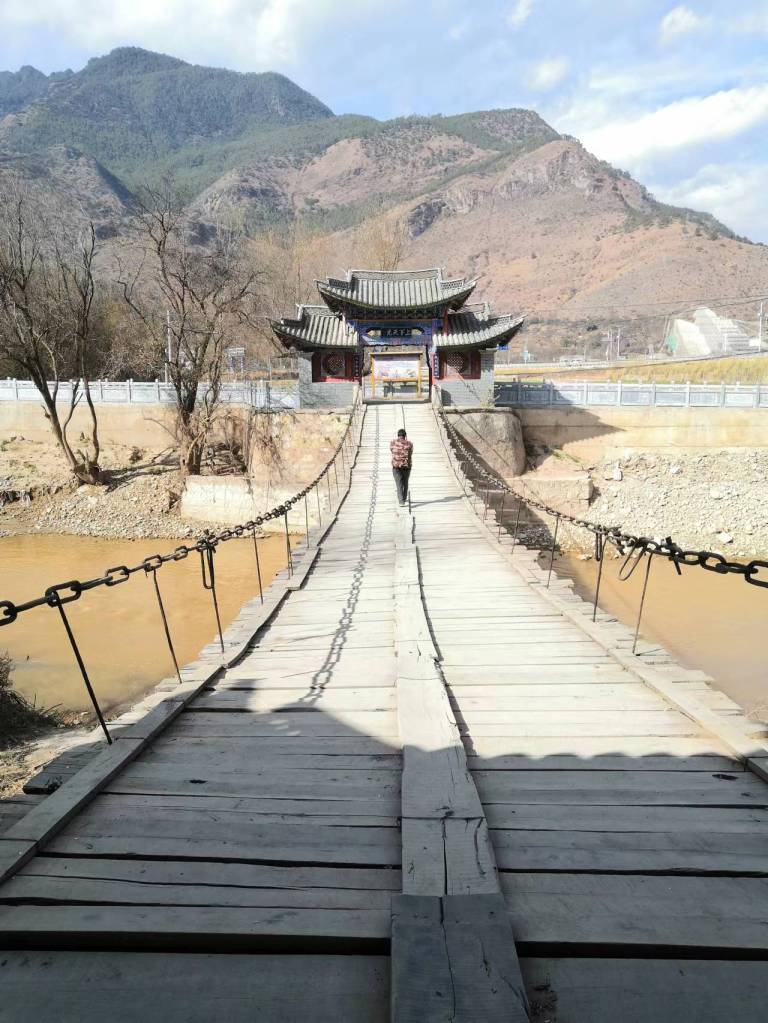
This is actually really important as if the river didn’t turn here it would result in China having considerably less fresh water flowing through it and powering its huge hydro electric dams never mind the importance of this river for trade within China. Along the way back we also stopped by a small village which fascinatingly had intact one of the few remaining Tea-Horse Road bridges.

These bridges used to span hundreds of kilometres across deep southern China in what was called the Tea-Horse-Roads. These ‘roads’ which were really more so trade pathways through the thick southern Chinese mountains and into Vietnam, Cambodia and Thailand were used for centuries as another route for Chinese tea to make its way slowly out of China and into South East Asia. The bridges are really just planks of wood held up by heavy chains.
To make up for me making him eat heavy, greasy Mexican food the previous night we stopped by this small village to get some Chinese snacks, local small pot soup and then later that evening went to a local Lijiang cuisine place. The people there were ethnically Tibetan and we got to try some Tibetan/Chinese food!


Now if I had been a less stupid person, I probably should have stuck with Wei as he headed further north to Shangri-La. It was particularly stupid as cases of covid in Kunming had occured and we both feared we may need a negative test just to travel out of Lijiang. So we went to a local hospital, got our tests done and then like I said if I was smart I would have stuck with him. However, I was an idiot, instead electing to visit a far southern part of Yunnan which sits on the border of Myanmar and is clearly heavily influenced by Thailand. In the most tacky way possible.
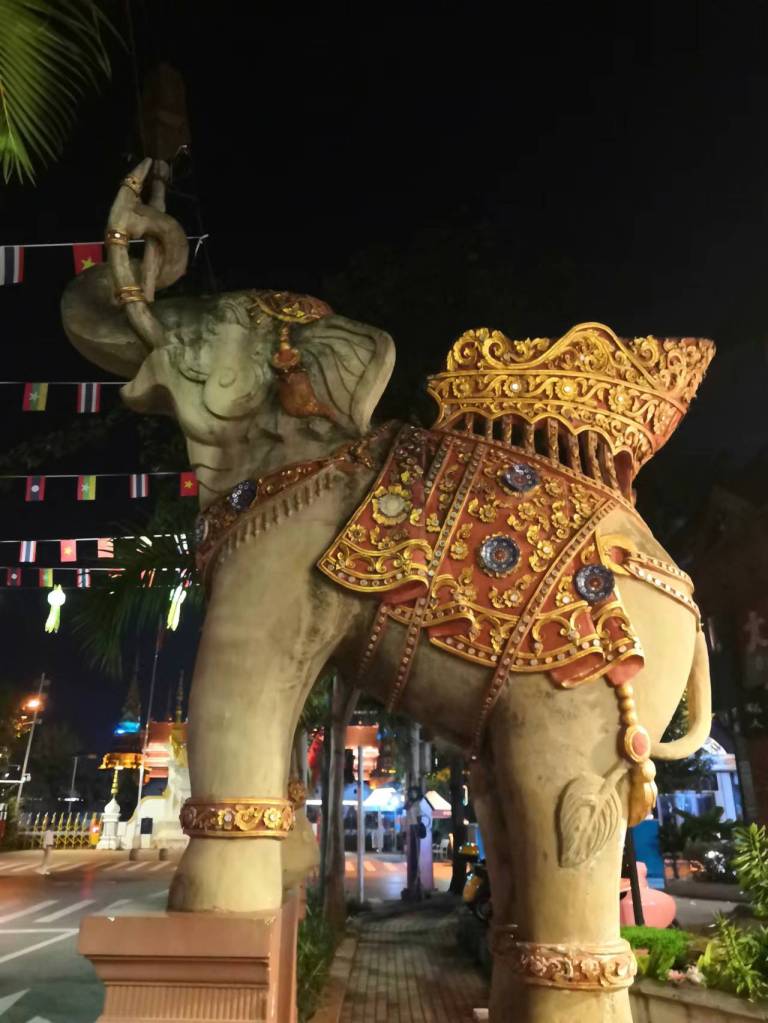
Xishuangbanna lied to the most southern part of Yunnan and is relatively close to Thailand. Thailand itself has become incredibly popular with Chinese tourists since the 2000’s as an exotic getaway which is oddly generally cheaper than China and similar enough to China to not be uncomfortable. Seeking to capitalize on this Xishuangbanna has invested hard in trying to make itself as Thai as possible building night markets, buddhist temples and just generally trying to make the city look as South East Asian as possible to uh…mixed results.

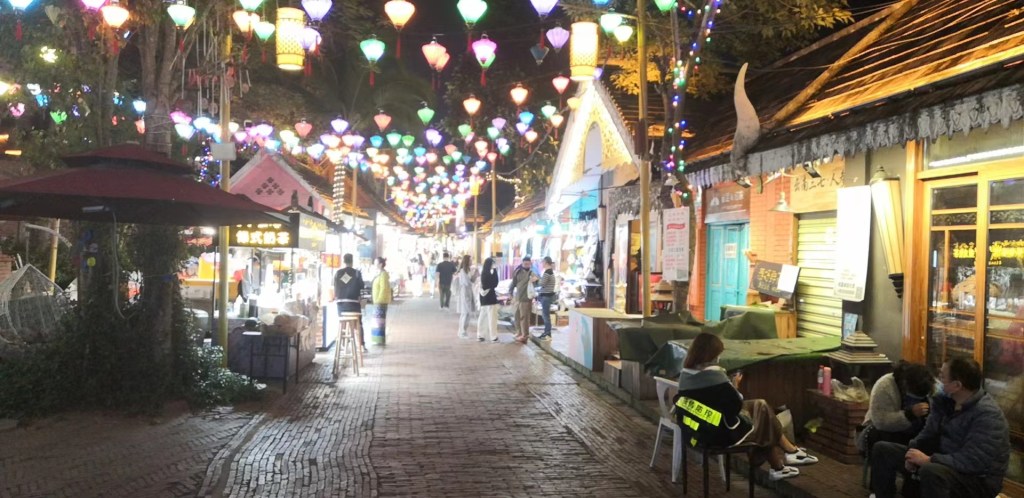

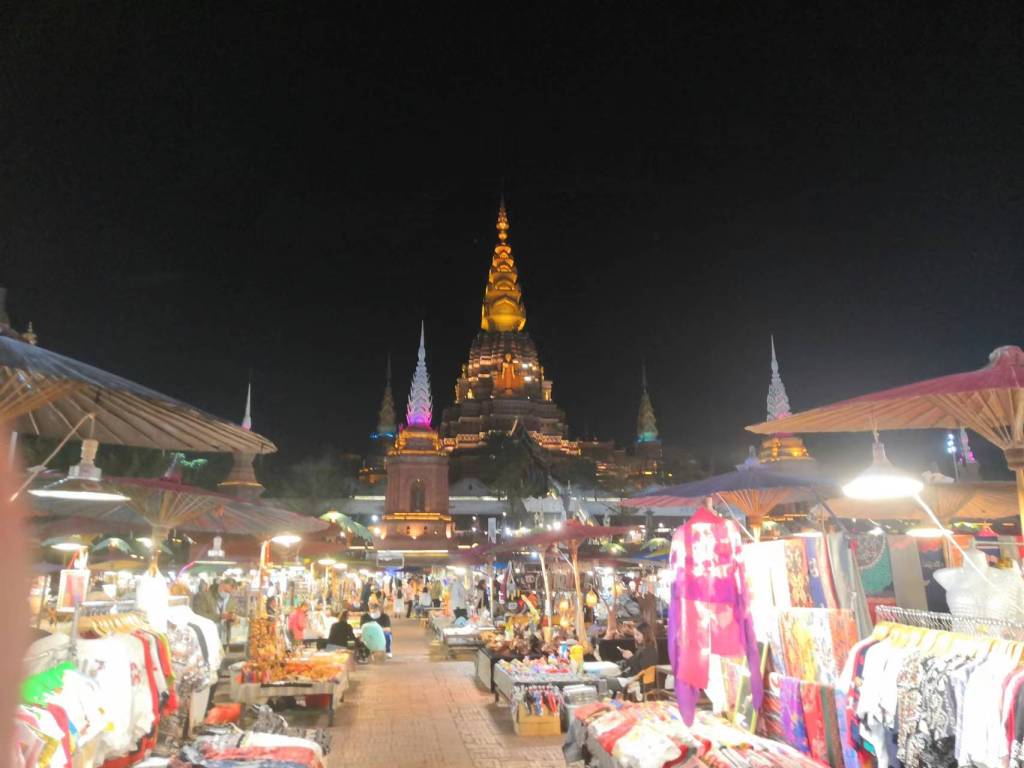
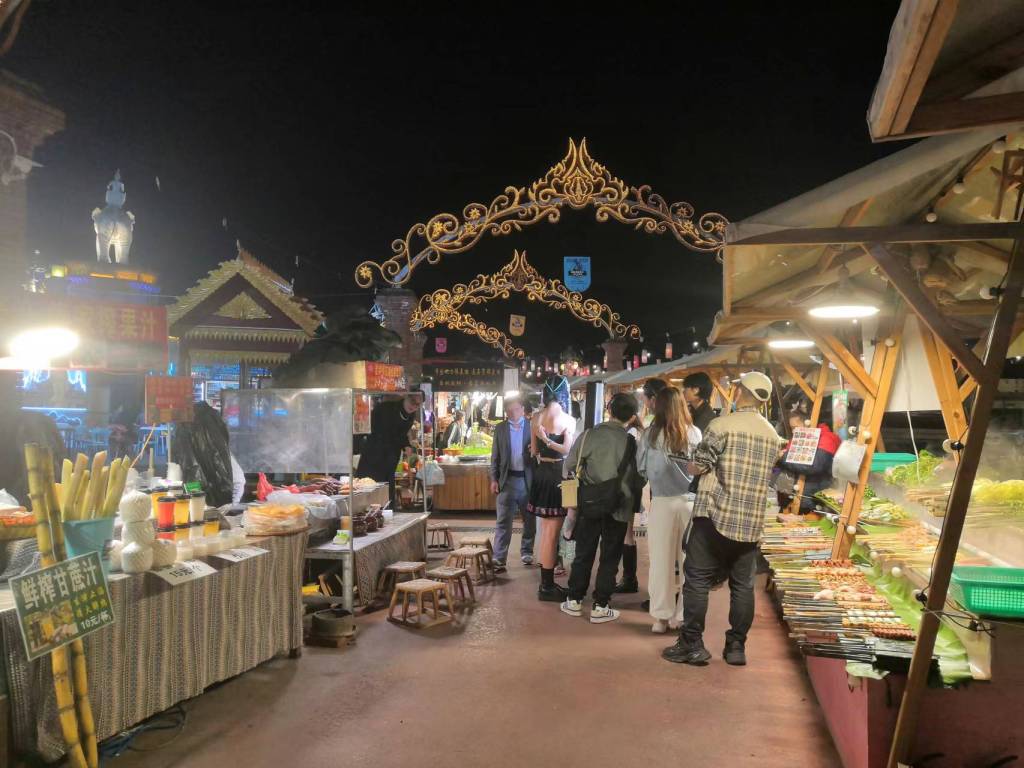
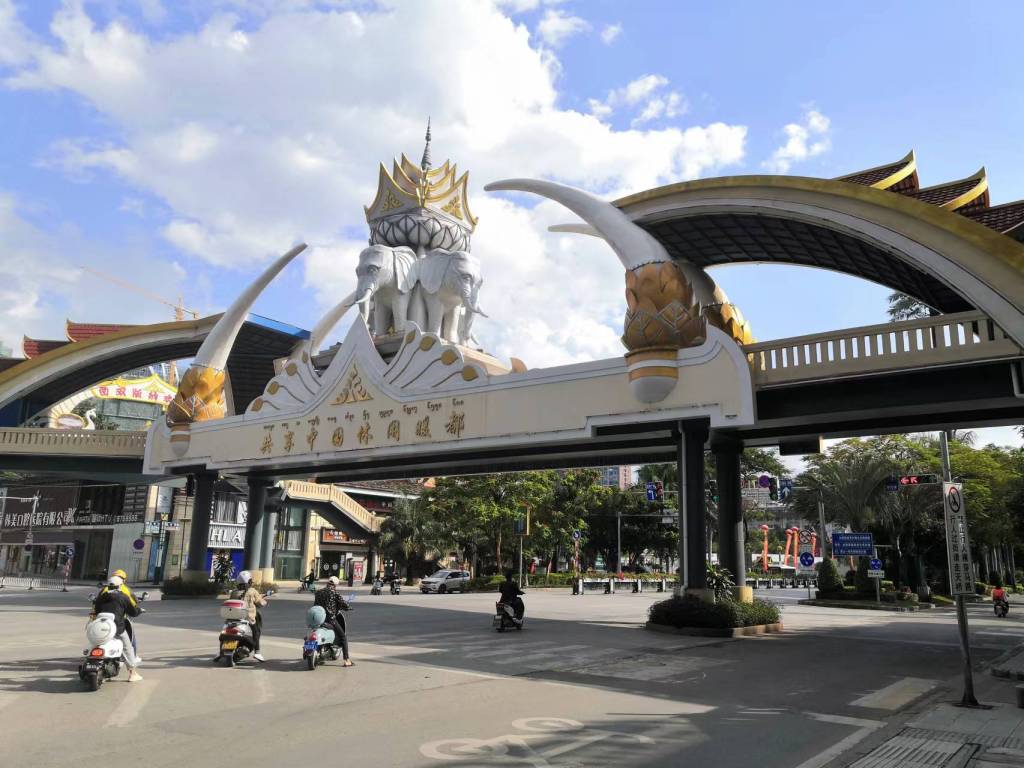
I visited the night market which is probably one of the largest in China if not the world as it stretches out over a kilometre along the cities main river. It’s really more like 3 different night markets. One set across a grid on a city street, one that runs along a park and one that runs along the river. All three kind of flow into eachother and its utterly massive, even flowing out onto the river on barges in places. Little did I know how badly things were soon to become. I had heard rumours when I checked in that cases had been detected in Kunming again and that those travellers had passed through Xishuangbanna about a week ago. The next morning I woke up and was told to go do mandatory testing and that I couldn’t leave the compound the hotel was in until I had done so. Suddenly walls sprung up and ‘voluteers’ were patrolling what was increasingly a ghost city. After about 2 hours in line I got my ‘YOU DID A TEST’ card which allowed me to move around the city for groceries.

My first and only goal was to get out. I figured out through talking to other foreigners and through the hotel staff that I could get out if I did 2 covid tests 24 hours apart and then applied for a permission to leave letter from the city hall. This was a fairly arduous affair due to the sheer number of people leaving and how inefficient Chinese hospitals are. To get a test you need to stand in about 5 lines each about an hour long. First you stand in a line to tell the hospital what you want. Then you go to another line to sign into the hospital and get a document to bring to another window. At this window you pay for the test. Then you go to another line to line up for another document to give to the tester. You then take this document and get into another line to do the test. Altogether about 5-7 hours. I managed to burn through it fairly quickly as me and the other foreigners just stood in different lines and held the spot for eachother to make the process doable in about 3 hours. Then came the biggest line of all…
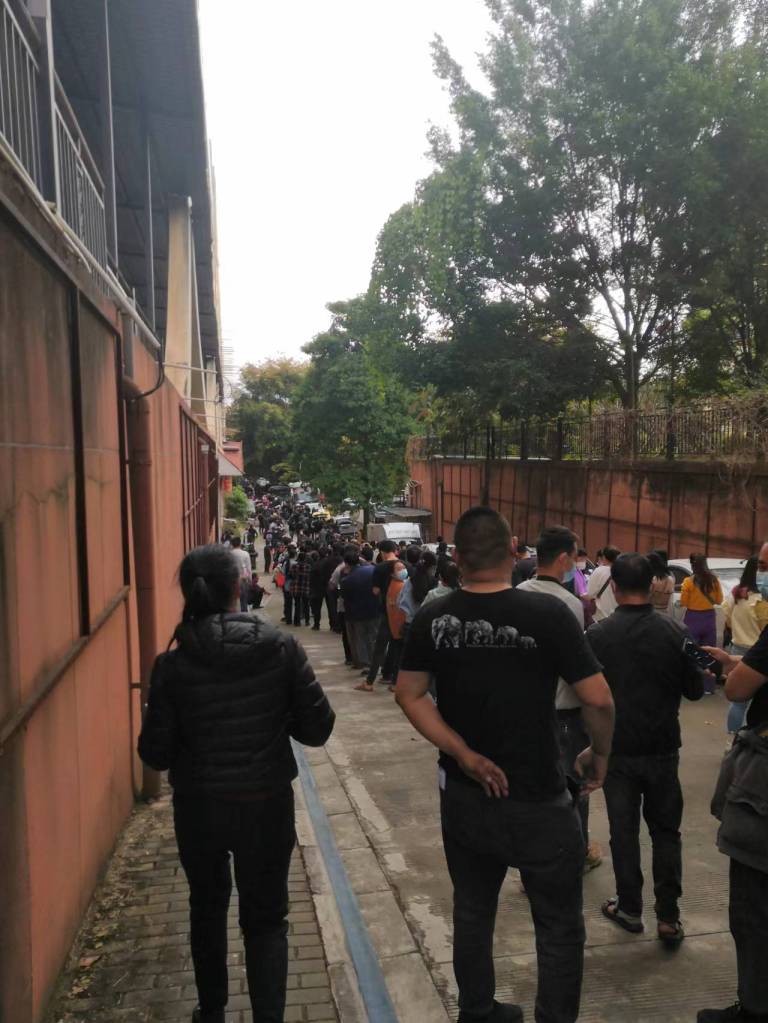
The line to get permission to leave. I actually filmed this thing and it took about 12 minutes to get from one end to the other. But after about 8 hours I got this document which allowed me to enter the train station to get to the airport in Kunming.

Oddly enough when I got to Kunming no one cared about seeing test results or papers, it was just to get out of Xishuangbanna. Because Xishuangbanna is so close to Myanmar’s border their city government takes things ludicrously seriously. Get this the city mass tested 9 times across 3 weeks and didn’t find a single other covid case…probably because the people who tested positive hadn’t been there for a week and so it was never in the city anyway. This is probably why the 7 foreigners I met managed to get back to Wuhan, Shanghai, Nanjing, and Beijing without any trouble at all…however Hangzhou decided to be weird.
I got home and the next morning got a text telling me I had 30 minutes to prepare for quarantine in a hotel. Making matters even more frustrating was that 3 of my colleagues had been in Xishuangbanna at the same time as me or slightly after and the longest any of them had to quarantine was for 2 days whilst some didn’t have to go into it at all.
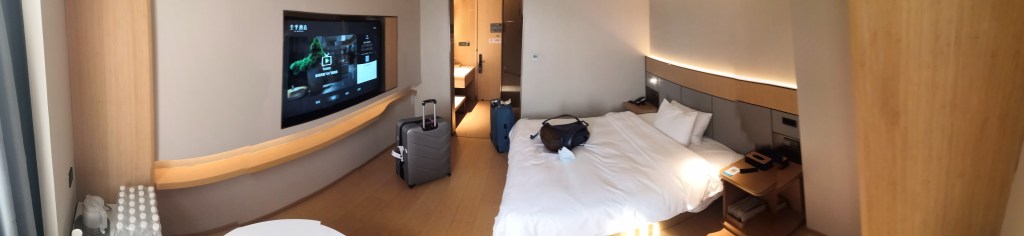
Meanwhile I had to endure this for the next 14 days.

Also I was required to drink 2 sacks of this gross brown traditional Chinese medicine. Which of course is basically just magic.

On the plus side I didn’t have to pay for it. How long you need to quarantine and why seems to be pretty random in China these days. My next trips were all to Shanghai and within Zheijiang province under the hopes that this wouldn’t happen again…then it happened again.


I enjoyed all your food pics minus maybe the quarantine meal. I also enjoyed your landscape photos. The aqua blue water is gorgeous. I couldn’t have managed any of the cable rides. I would have sat in a corner of the cable car curled up into a small ball. Janis
LikeLike
Thank you Janis! I’ll try to take more food pictures in the future!
LikeLike
This was absolutely fascinating. I particularly loved the night market pictures, although the food, the stone forest, and the golden sketchy limbed statues were also amazing. I’m hoping that someday you will find the time to write a book about your adventures.
LikeLiked by 1 person
Very interesting read son!
LikeLike